Social Change and the Global Middle East
Annual Theme 2022
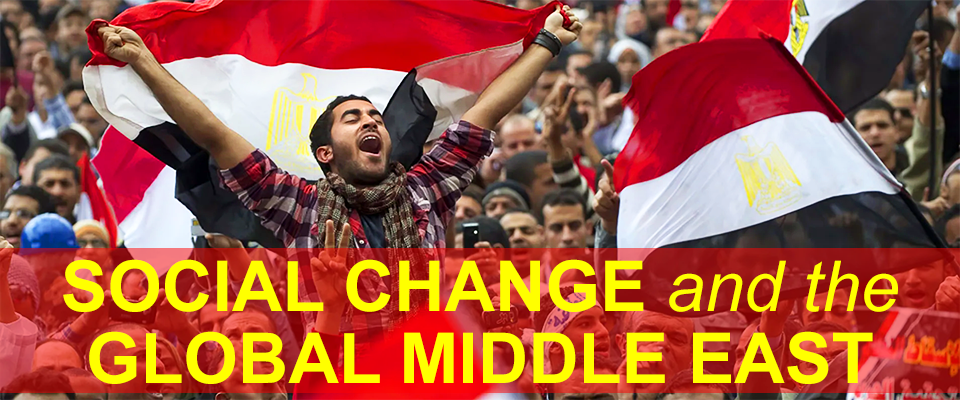
The Middle East is a region whose recent history has been marked by rapid, often unexpected bouts of change. The last decade in particular has seen the region experience a series of seismic events set into motion by the Arab Spring and escalating regional rivalries. These events, including the largest refugee crisis since World War II and the world’s worst humanitarian crisis, have blurred the lines between regions and borders. The impacts have been worldwide, as global powers have grappled with the legacies of their involvement in the Middle East. At the same time, these events have pushed social issues to the forefront, encouraging dialogue, expression, and the rethinking of established norms. In its 2021-2022 theme year, Social Change and the Global Middle East, The Andrea Mitchell Center examines the region through multiple lenses and perspectives in order to shed new light on a part of the world that remains as relevant, and as complicated, as ever.
Theorizing Political Violence
Forum (Room 250), Ronald O. Perelman Center for Political Science and Economics
Map / Accessibility

Governance
Forum (Room 250), Ronald O. Perelman Center for Political Science and Economics
In-Person Event
Map / Accessibility
Regional and External Politics
Online Event
Religion and Political Transformation
Online Event
Citizenship
Online Event
Social Change and Contentious Politics
Online Event
Map / Accessibility
An Evening with Tawakkol Karman
Perry World House, World Forum, 3803 Locust Walk
"Social Change and the Global Middle East" Planning Committee
The members of the “Social Change and the Global Middle East” planning committee are John H. Ghazvinian, Chair (Middle East Center), Sa'ed Atshan (Anthropology, Emory University), Ibrahim Bakri (Penn Middle East Center), Roxanne L. Euben (Penn Political Science), Huda Fakhreddine (Penn Near Eastern Languages and Civilizations), Hocine Fetni (Penn Sociology), Jeffrey Green (Andrea Mitchell Center and Penn Political Science), Nada Matta (Sociology, Drexel University), Matthew Roth (Andrea Mitchell Center), Eileen Ryan (History, Temple University), Zainab Saleh (Anthropology, Haverford College), and Sean Yom (Political Science, Temple University).