Past Events
133 S. 36th Street, Room 250 (Forum)
Perelman Center for Political Science and Economics
Food provided.
NEW students: Please register here (scroll down to find the event).
RETURNING students: Please register here.
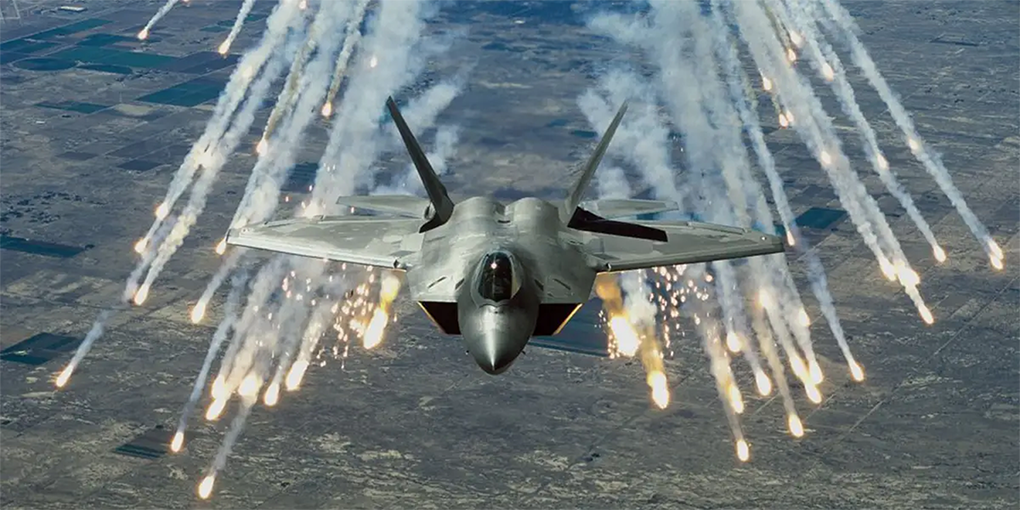
IN AN EVENT THAT WELCOME NEW and returning students alike, join the five caucuses of the Penn Political Union as they debate the resolution, "The U.S. Should Decrease Its Military Spending." Nearing $900 billion in recent years, the U.S. military budget not only dwarves that of many other federal agencies, but is far greater than the military outlays of any other nation. Given its unique role in ensuring global security and the increasing number of threats it faces, however, this level of spending may be anything but disproportionate. How should we balance urgent domestic priorities against the need for national defense and global stability?
The PENN POLITICAL UNION (PPU) is an undergraduate organization formed in 2014 that features parliamentary-style deliberation on urgent contemporary issues. To represent a wide spectrum of political opinion, students affiliate with five member political parties: Libertarian, Conservative, Centrist, Liberal, and Progressive. The goal of PPU, in both debates and less formal discussions, is to fully represent political diversity while maintaining civility and openness to other outlooks.
PPU DEBATE - Should the US Decrease Its Military Spending?
133 S. 36th Street, Room 250 (Forum)
Perelman Center for Political Science and Economics
Food provided.
NEW students: Please register here (scroll down to find the event).
RETURNING students: Please register here.
IN AN EVENT THAT WELCOME NEW and returning students alike, join the five caucuses of the Penn Political Union as they debate the resolution, "The U.S. Should Decrease Its Military Spending." Nearing $900 billion in recent years, the U.S. military budget not only dwarves that of many other federal agencies, but is far greater than the military outlays of any other nation. Given its unique role in ensuring global security and the increasing number of threats it faces, however, this level of spending may be anything but disproportionate. How should we balance urgent domestic priorities against the need for national defense and global stability?
The PENN POLITICAL UNION (PPU) is an undergraduate organization formed in 2014 that features parliamentary-style deliberation on urgent contemporary issues. To represent a wide spectrum of political opinion, students affiliate with five member political parties: Libertarian, Conservative, Centrist, Liberal, and Progressive. The goal of PPU, in both debates and less formal discussions, is to fully represent political diversity while maintaining civility and openness to other outlooks.

Online Event. Zoom link sent to registered attendees.
View the video of the event here.

As part of the Mitchell Center's Capitalism/Socialism/Democracy Series, you are invited to join THEA RIOFRANCOS for an in-depth conversation about environmentalism in an age of extraction. Drawing on Riofrancos's recent work on the mining of lithium — an essential component of electric batteries for electric vehicles — this conversation asks difficult questions about battery supply chains, which cause degradation of biodiversity and water systems in the Global South. As Riofrancos also shows, however, the lithium frontier is expanding and mutating, with new projects being proposed — and protest against them erupting — in the Global North as well. She will also discuss her work on lithium extraction in Chile, the US, and Europe, and oil and mining in Ecuador, reframing the radical politics that arises out of the politicization of anti-extraction. Instead of accepting common narratives of tensions between labor movements, Indigenous resistance, and other liberatory politics, Riofrancos gives us a wider picture of how truly global climate justice takes Indigenous sovereignty, environmental policy, and transit justice into account. Ultimately, she shows that we can achieve zero emissions mobility while also reducing demand for harmful mining. Moderated by M. EDITH SKLAROFF.
THEA RIOFRANCOS is an Associate Professor of Political Science at Providence College, an Andrew Carnegie Fellow (2020-2022), and a member of the Climate + Community Project.
Remapping Climate Justice: Lithium, Extractivism, and Going Green in the Global North (Thea Riofrancos)
Online Event. Zoom link sent to registered attendees.
View the video of the event here.
As part of the Mitchell Center's Capitalism/Socialism/Democracy Series, you are invited to join THEA RIOFRANCOS for an in-depth conversation about environmentalism in an age of extraction. Drawing on Riofrancos's recent work on the mining of lithium — an essential component of electric batteries for electric vehicles — this conversation asks difficult questions about battery supply chains, which cause degradation of biodiversity and water systems in the Global South. As Riofrancos also shows, however, the lithium frontier is expanding and mutating, with new projects being proposed — and protest against them erupting — in the Global North as well. She will also discuss her work on lithium extraction in Chile, the US, and Europe, and oil and mining in Ecuador, reframing the radical politics that arises out of the politicization of anti-extraction. Instead of accepting common narratives of tensions between labor movements, Indigenous resistance, and other liberatory politics, Riofrancos gives us a wider picture of how truly global climate justice takes Indigenous sovereignty, environmental policy, and transit justice into account. Ultimately, she shows that we can achieve zero emissions mobility while also reducing demand for harmful mining. Moderated by M. EDITH SKLAROFF.
THEA RIOFRANCOS is an Associate Professor of Political Science at Providence College, an Andrew Carnegie Fellow (2020-2022), and a member of the Climate + Community Project.

16th Annual Mitchell Center Undergraduate Research Conference
133 S. 36th Street, Room 250 (The Forum)
Lunch provided.

Hall of Flags, Houston Hall, 3417 Spruce Street
In-person event. Please register here.

The Philomathean Society's 2023 Annual Oration welcomes renowned public intellectual Cornel West for a talk on community and public on civic duty and engagement moderated by Penn University Chaplain and Vice President for Social Equity & Community Rev. Charles (Chaz) Lattimore Howard. A meet and greet with Dr. West follows the conversation.
Presented by The Philomathean Society with support from SPEC Connaissance, SPEC Full Planned, SNF Paideia Program, Faith Fund, Department of English, Department of History, Department of Philosophy, Department of Sociology, The Center for Media and Inequality, ICF, New Student Orientation & Academic Initiatives, Student Committee on Undergraduate Education, Sachs Program for Arts Innovation, Ben Franklin Scholars, Civic House, GAPSA, Albert M. Greenfield Intercultural Center, Andrea Mitchell Center for the Study of Democracy, and Wolf Humanities Center.
Dr. Cornel West, affectionately known to many as Brother West, is the Dietrich Bonhoeffer Chair at Union Theological Seminary. Dr. West teaches on the works of Dietrich Bonhoeffer, as well as courses in Philosophy of Religion, African American Critical Thought, and a wide range of subjects — including but by no means limited to, the classics, philosophy, politics, cultural theory, literature, and music. He has a passion to communicate to a vast variety of publics in order to keep alive the legacy of Martin Luther King, Jr. — a legacy of telling the truth and bearing witness to love and justice.
Dr. West is the former Professor of the Practice of Public Philosophy at Harvard University and Professor Emeritus at Princeton University. Cornel West graduated Magna Cum Laude from Harvard in three years and obtained his M.A. and Ph.D. in Philosophy at Princeton.
He has written 20 books and has edited 13. He is best known for his classics, Race Matters and Democracy Matters, and for his memoir, Brother West: Living and Loving Out Loud. His most recent book, Black Prophetic Fire, offers an unflinching look at nineteenth and twentieth-century African American leaders and their visionary legacies.
The Philomathean Society of the University of Pennsylvania was founded in 1813. The Society has pursued its mission of learning outside the classroom in whatever ways struck its membership best; a common answer to the question “what is Philo?” is “whatever Philos want it to be.” Over the centuries it has maintained its student autonomy. Thus, Philos have at one time or another embarked on major works of scholarship (like producing the first English translation of the Rosetta Stone), advocated for the creation of the Comparative Literature, Religious Studies, and American Civilization departments, launched campus publications (the longest-lived of which is the Daily Pennsylvanian), and staged major dramatic productions (the Masque of the American Drama involved every undergraduate then enrolled at Penn).
Today the Society regularly organizes and hosts talks, lectures series, intimate professor teas, as well as poetry readings, film screenings, dramatic performances, art shows, debates, exhibits, and special classes. All efforts are run, planned, and organized completely by Philos. The Society’s flagship event is the Annual Oration, where Philo invites an public intellectual to speak to the public. Past Annual Orators have included Jane Goodall, Ayn Rand, the President of Haiti, Margaret Mead, Tony Auth, Hans Morgenthau, Jared Diamond, Judith Butler, Daniel Dennett, Salman Rushdie, Arthur Miller, and Richard Dawkins. Most of Philo’s events and activities take place in our historic Philomathean Hall. All events are free and open to the public.
Philo’s structure, activities, and future are determined by its undergraduate and graduate student membership. Members elect a Cabinet each semester led by a Moderator who, among other things, chairs Philo’s general meetings held on alternate Fridays at 8:30pm. Membership in Philo is eternal; it continues long past one’s time at the University.
CO-SPONSORED - An Evening with Cornel West
Hall of Flags, Houston Hall, 3417 Spruce Street
In-person event. Please register here.
The Philomathean Society's 2023 Annual Oration welcomes renowned public intellectual Cornel West for a talk on community and public on civic duty and engagement moderated by Penn University Chaplain and Vice President for Social Equity & Community Rev. Charles (Chaz) Lattimore Howard. A meet and greet with Dr. West follows the conversation.
Presented by The Philomathean Society with support from SPEC Connaissance, SPEC Full Planned, SNF Paideia Program, Faith Fund, Department of English, Department of History, Department of Philosophy, Department of Sociology, The Center for Media and Inequality, ICF, New Student Orientation & Academic Initiatives, Student Committee on Undergraduate Education, Sachs Program for Arts Innovation, Ben Franklin Scholars, Civic House, GAPSA, Albert M. Greenfield Intercultural Center, Andrea Mitchell Center for the Study of Democracy, and Wolf Humanities Center.
Dr. Cornel West, affectionately known to many as Brother West, is the Dietrich Bonhoeffer Chair at Union Theological Seminary. Dr. West teaches on the works of Dietrich Bonhoeffer, as well as courses in Philosophy of Religion, African American Critical Thought, and a wide range of subjects — including but by no means limited to, the classics, philosophy, politics, cultural theory, literature, and music. He has a passion to communicate to a vast variety of publics in order to keep alive the legacy of Martin Luther King, Jr. — a legacy of telling the truth and bearing witness to love and justice.
Dr. West is the former Professor of the Practice of Public Philosophy at Harvard University and Professor Emeritus at Princeton University. Cornel West graduated Magna Cum Laude from Harvard in three years and obtained his M.A. and Ph.D. in Philosophy at Princeton.
He has written 20 books and has edited 13. He is best known for his classics, Race Matters and Democracy Matters, and for his memoir, Brother West: Living and Loving Out Loud. His most recent book, Black Prophetic Fire, offers an unflinching look at nineteenth and twentieth-century African American leaders and their visionary legacies.
The Philomathean Society of the University of Pennsylvania was founded in 1813. The Society has pursued its mission of learning outside the classroom in whatever ways struck its membership best; a common answer to the question “what is Philo?” is “whatever Philos want it to be.” Over the centuries it has maintained its student autonomy. Thus, Philos have at one time or another embarked on major works of scholarship (like producing the first English translation of the Rosetta Stone), advocated for the creation of the Comparative Literature, Religious Studies, and American Civilization departments, launched campus publications (the longest-lived of which is the Daily Pennsylvanian), and staged major dramatic productions (the Masque of the American Drama involved every undergraduate then enrolled at Penn).
Today the Society regularly organizes and hosts talks, lectures series, intimate professor teas, as well as poetry readings, film screenings, dramatic performances, art shows, debates, exhibits, and special classes. All efforts are run, planned, and organized completely by Philos. The Society’s flagship event is the Annual Oration, where Philo invites an public intellectual to speak to the public. Past Annual Orators have included Jane Goodall, Ayn Rand, the President of Haiti, Margaret Mead, Tony Auth, Hans Morgenthau, Jared Diamond, Judith Butler, Daniel Dennett, Salman Rushdie, Arthur Miller, and Richard Dawkins. Most of Philo’s events and activities take place in our historic Philomathean Hall. All events are free and open to the public.
Philo’s structure, activities, and future are determined by its undergraduate and graduate student membership. Members elect a Cabinet each semester led by a Moderator who, among other things, chairs Philo’s general meetings held on alternate Fridays at 8:30pm. Membership in Philo is eternal; it continues long past one’s time at the University.
Various Locations. For more information and to register, please go here.
This three-day, international conference, which developed from conversations about regional nonproliferation policy, takes a wide view of Nuclear Issues in the Middle East and North Africa. It examines nuclear energy alongside nuclear weapons, and investigates the conceptual and material processes that enforce this divide. It broadens the regional scope to connect the Maghreb, the Levant, and further East, while also expanding the disciplinary purview to consider possible futures and trace historical roots. It explores ongoing changes in great power attitudes toward the region and the role of nuclear technologies in these shifts. At the same time, it takes seriously the perspectives of smaller states and non-state actors, featuring not only regional experts but also experts from the region itself. The first conference aiming to consider all aspects of the atomic age in the Middle East and North Africa, it incorporates a wide range of historical, political, diplomatic, cultural, and technological approaches to the question — reflecting the insights of scholars, policymakers, and practitioners alike.
Sponsored by the Kleinman Center for Energy Policy, Penn Middle East Center, Penn Global, Christopher H. Browne Center for International Politics, Penn International Relations Program, Andrea Mitchell Center for the Study of Democracy, Penn Department of History, and the Penn Department of History and Sociology of Science.
CO-SPONSORED - Nuclear Issues in the Middle East and North Africa
Various Locations. For more information and to register, please go here.
This three-day, international conference, which developed from conversations about regional nonproliferation policy, takes a wide view of Nuclear Issues in the Middle East and North Africa. It examines nuclear energy alongside nuclear weapons, and investigates the conceptual and material processes that enforce this divide. It broadens the regional scope to connect the Maghreb, the Levant, and further East, while also expanding the disciplinary purview to consider possible futures and trace historical roots. It explores ongoing changes in great power attitudes toward the region and the role of nuclear technologies in these shifts. At the same time, it takes seriously the perspectives of smaller states and non-state actors, featuring not only regional experts but also experts from the region itself. The first conference aiming to consider all aspects of the atomic age in the Middle East and North Africa, it incorporates a wide range of historical, political, diplomatic, cultural, and technological approaches to the question — reflecting the insights of scholars, policymakers, and practitioners alike.
Sponsored by the Kleinman Center for Energy Policy, Penn Middle East Center, Penn Global, Christopher H. Browne Center for International Politics, Penn International Relations Program, Andrea Mitchell Center for the Study of Democracy, Penn Department of History, and the Penn Department of History and Sociology of Science.