Past Events
Kelly Writers House, 3805 Locust Walk.
In-person: Please register here.
Free and open to the public. Reception follows.

This evening withDEVI LOCKWOOD, author of 1,001 Voices on Climate Change, will bring together the Penn community with participants in PPEH's year-long My Philadelphia Climate Story public research project—nine high school teachers working in eight Philadelphia School District schools across the city—for a gathering focused on climate storytelling. A reception will follow.
Listen Up! is a two-day climate week program on October 12-13th that provides the first opportunity for My Philadelphia Climate Story teachers and their students, to see and meet one another and members of the Penn community, to participate in climate storytelling workshops, and to learn from and talk with prominent climate storytellers.
CO-SPONSORED - Listen Up! Climate Storytelling with Devi Lockwood
Kelly Writers House, 3805 Locust Walk.
In-person: Please register here.
Free and open to the public. Reception follows.
This evening withDEVI LOCKWOOD, author of 1,001 Voices on Climate Change, will bring together the Penn community with participants in PPEH's year-long My Philadelphia Climate Story public research project—nine high school teachers working in eight Philadelphia School District schools across the city—for a gathering focused on climate storytelling. A reception will follow.
Listen Up! is a two-day climate week program on October 12-13th that provides the first opportunity for My Philadelphia Climate Story teachers and their students, to see and meet one another and members of the Penn community, to participate in climate storytelling workshops, and to learn from and talk with prominent climate storytellers.
133 S. 36th Street, Room 250 (The Forum)
Perelman Center for Political Science and Economics
Food provided
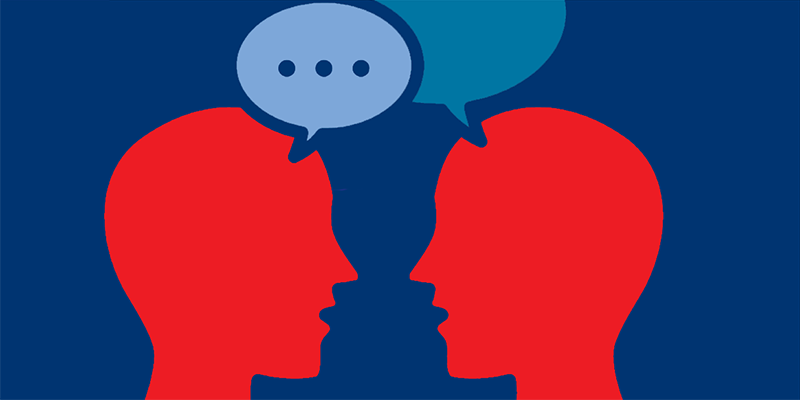
JOIN THE FIVE CAUCUSES of the Penn Political Union in informal conversation with the PPU Board and other PPU members.
The PPU is unique among debating societies in encouraging participants to make heartfelt cases for policies they believe in to a politically diverse group of fellow students. Members can join one of five caucuses that span the political spectrum: Progressive, Liberal, Centrist, Conservative, and Libertarian. They can then take active roles in formal debates on important policy problems. At a time of political polarization and social-media bubbles, it is an opportunity to hone and challenge one’s own opinions, as well as make friendships “across the aisle” and cultivate the practices of civil discourse.
PPU - Meet the Caucuses and "Speed Dating"
133 S. 36th Street, Room 250 (The Forum)
Perelman Center for Political Science and Economics
Food provided
JOIN THE FIVE CAUCUSES of the Penn Political Union in informal conversation with the PPU Board and other PPU members.
The PPU is unique among debating societies in encouraging participants to make heartfelt cases for policies they believe in to a politically diverse group of fellow students. Members can join one of five caucuses that span the political spectrum: Progressive, Liberal, Centrist, Conservative, and Libertarian. They can then take active roles in formal debates on important policy problems. At a time of political polarization and social-media bubbles, it is an opportunity to hone and challenge one’s own opinions, as well as make friendships “across the aisle” and cultivate the practices of civil discourse.

Opening the People's Eyes: Machiavelli on Civic Versus Princely Leadership (John McCormick)
133 S. 36th Street, Auditorium (Basement)
Perelman Center for Political Science and Economics
Online only. Please register here.
Link and papers sent to registered attendees.
The Ocean Swimmers: Experimental Documentary and the Humanitarian Logic
Anat Dan (Comparative Literature, Penn)
FROM STREAMING PLATFORMS TO ART GALLERIES, “The European Refugee Crisis” has become a prominent on-screen theme over the past decade. As several film scholars have noticed, the documentary mode has a central role in this phenomenon with high-profile films such as Ai Weiwei’s "Human Flow" (2017) and Jonas Rasmussen’s "Flee" (2021). Concurrently, there is a growing trend of migration documentaries that decenter the human. By eliminating the individual, these experimental documentaries demonstrate a post-humanist aesthetics and ethics, and yet, they do not shy away from the modern project of emancipation. ANAT DAN offers a close-reading of Philip Scheffner’s "Havarie" (2016) and Amel Alzakout’s "Purple Sea" (2020), two films that were made against the backdrop of the Mediterranean crossing in the aftermath of the Arab Spring and civil war in Syria. Focusing on the films’ abstraction techniques, Dan asks: How should we to understand the films’ post-human aesthetics considering both films examining the unfolding events of migrants awaiting rescue at sea? How do the films work through politics of suffering? Do they suggest alternative forms of sociability? And if so, what do they look like?
Democracy Without Borders
Kristin Zuhone (Political Science, Berkeley)
BORDERS PROVIDE A SIMPLE ANSWER TO A DIFFICULT QUESTION: If democracy empowers the demos, how are we to define the demos? But by remaining fixed across issues such as economic globalization, environmental pollution, and migration control, borders compromise self-determination by the relevant communities in two respects: They are over-inclusive for some and under-inclusive for others. Is it possible, then, to have democracy without borders? While many political theorists would answer “no,” KRISTIN ZUHONE instead answers “yes.” As a solution to the boundary problem, she proposes an institutional design that constitutes the demos via a standard that is both non-arbitrary and procedurally democratic. The institutional design contains a procedure that determines the boundaries of collective decision-making, and the institutional design determines the boundaries of collective decision-making internally to, rather than externally of, the procedure that it contains. Thus, she argues, it is indeed possible to have democracy without borders.
GRAD WORKSHOP - Borders and Belonging: What Makes Democratic Citizenship Possible?
Online only. Please register here.
Link and papers sent to registered attendees.
The Ocean Swimmers: Experimental Documentary and the Humanitarian Logic
Anat Dan (Comparative Literature, Penn)
FROM STREAMING PLATFORMS TO ART GALLERIES, “The European Refugee Crisis” has become a prominent on-screen theme over the past decade. As several film scholars have noticed, the documentary mode has a central role in this phenomenon with high-profile films such as Ai Weiwei’s "Human Flow" (2017) and Jonas Rasmussen’s "Flee" (2021). Concurrently, there is a growing trend of migration documentaries that decenter the human. By eliminating the individual, these experimental documentaries demonstrate a post-humanist aesthetics and ethics, and yet, they do not shy away from the modern project of emancipation. ANAT DAN offers a close-reading of Philip Scheffner’s "Havarie" (2016) and Amel Alzakout’s "Purple Sea" (2020), two films that were made against the backdrop of the Mediterranean crossing in the aftermath of the Arab Spring and civil war in Syria. Focusing on the films’ abstraction techniques, Dan asks: How should we to understand the films’ post-human aesthetics considering both films examining the unfolding events of migrants awaiting rescue at sea? How do the films work through politics of suffering? Do they suggest alternative forms of sociability? And if so, what do they look like?
Democracy Without Borders
Kristin Zuhone (Political Science, Berkeley)
BORDERS PROVIDE A SIMPLE ANSWER TO A DIFFICULT QUESTION: If democracy empowers the demos, how are we to define the demos? But by remaining fixed across issues such as economic globalization, environmental pollution, and migration control, borders compromise self-determination by the relevant communities in two respects: They are over-inclusive for some and under-inclusive for others. Is it possible, then, to have democracy without borders? While many political theorists would answer “no,” KRISTIN ZUHONE instead answers “yes.” As a solution to the boundary problem, she proposes an institutional design that constitutes the demos via a standard that is both non-arbitrary and procedurally democratic. The institutional design contains a procedure that determines the boundaries of collective decision-making, and the institutional design determines the boundaries of collective decision-making internally to, rather than externally of, the procedure that it contains. Thus, she argues, it is indeed possible to have democracy without borders.
133 S. 36th Street, Room 250 (Forum)
Perelman Center for Political Science and Economics
Food Provided
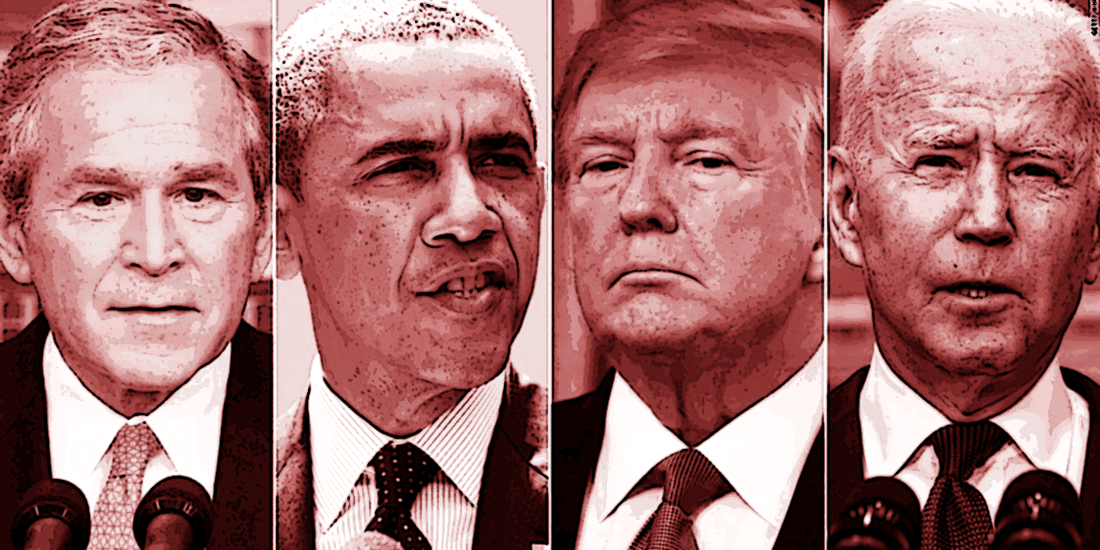
Join the five caucuses of the Penn Political Union (PPU) for a debate on the resolution, "The power of the president should be increased."
The PPU is unique among debating societies in encouraging participants to make heartfelt cases for policies they believe in to a politically diverse group of fellow students. Members can join one of five caucuses that span the political spectrum: Progressive, Liberal, Centrist, Conservative, and Libertarian. They can then take active roles in formal debates on important policy problems. At a time of political polarization and social-media bubbles, it is an opportunity to hone and challenge one’s own opinions, as well as make friendships “across the aisle” and cultivate the practices of civil discourse.
PPU DEBATE - Should the Power of the Presidency Be Increased?
133 S. 36th Street, Room 250 (Forum)
Perelman Center for Political Science and Economics
Food Provided
Join the five caucuses of the Penn Political Union (PPU) for a debate on the resolution, "The power of the president should be increased."
The PPU is unique among debating societies in encouraging participants to make heartfelt cases for policies they believe in to a politically diverse group of fellow students. Members can join one of five caucuses that span the political spectrum: Progressive, Liberal, Centrist, Conservative, and Libertarian. They can then take active roles in formal debates on important policy problems. At a time of political polarization and social-media bubbles, it is an opportunity to hone and challenge one’s own opinions, as well as make friendships “across the aisle” and cultivate the practices of civil discourse.
