Past Events
Online Event: Please register here.
Links to papers sent to registrants.
South to Mongolia, East to Manchuria: Buriat Transborder Migration during the Russian Civil Wars

Griffin Creech (Penn History)
BETWEEN 1918 AND 1920, APPROXIMATELY 40,000 BURIATS, inhabitants of the Russian-Mongolian borderlands in eastern Siberia, fled the violence and chaos of the Russian civil wars by crossing into the relative safety of neighboring autonomous Mongolia and Manchuria. As they exited their homelands in the collapsed Russian empire, rival state-building projects, including indigenous, Soviet, and anti-Soviet forces, competed for power and legitimacy in the region. GRIFFIN CREECH investigates the threats to these projects of state construction that the migration of tens of thousands of Buriats posed by examining state builders attempts to manage transborder Buriat populations. The thorny questions of citizenship, jurisdiction, and sovereignty that this process brought to the fore confounded state builders and limited the institutional options available to them. Drawing on Charles Tilly’s conception of “popular resistance to war making and state making” and underscoring the ability of Buriat mobile pastoralists to shape the contours of an emerging state order, Creech suggests that their migration, born out of the Russian civil wars which were themselves products of competing visions of liberation engendered by the Russian revolutions of 1917, severely limited the viability of non-Bolshevik political alternatives in eastern Siberia. Thinking with Buriat transborder migrants thus reveals the dilemmas faced by nominally democratic political projects forced to construct institutions in the turbulent environment of imperial collapse and civil war.
Rights to Democratic Participation in Times of Transnational Mobility
Anna Milioni (King’s College Dept. of Philosophy)
MOBILE MIGRANTS, WHO FOR EITHER LACK OF THE LEGAL right to remain or for other reasons, do not settle permanently in their state of residence, but move from one state to another in short periods of time, pose a challenge to democracy. ANNA MILIONI questions which justice-related reasons we have to value democracy, in order to determine (a) which should be the principles for the allocation of political rights to mobile migrants and (b) whether it would be permissible to replace democracy with some non-democratic political regime in cases of increased mobility. Milioni first examines two influential instrumental arguments for democracy, namely that it contributes to the protection of fundamental individual rights and that it has important epistemic benefits. She defends a weak instrumentalist interpretation of these arguments, according to which the link between democracy and the advent of these outcomes is contingent. She then examines whether there are any additional, non-instrumental reasons to prefer democracy over non-democratic regimes. Milioni presents two non-instrumental arguments for democracy, one focused mainly on autonomy and the other on equality. To reconcile these two grounds, she proposes a Kantian-inspired argument, according to which democracy allows us to relate to each other as free and as equals.
GRAD WORKSHOP - Crossing Borders and Being Crossed by Borders: Building States and Conferring Rights
Online Event: Please register here.
Links to papers sent to registrants.
South to Mongolia, East to Manchuria: Buriat Transborder Migration during the Russian Civil Wars
Griffin Creech (Penn History)
BETWEEN 1918 AND 1920, APPROXIMATELY 40,000 BURIATS, inhabitants of the Russian-Mongolian borderlands in eastern Siberia, fled the violence and chaos of the Russian civil wars by crossing into the relative safety of neighboring autonomous Mongolia and Manchuria. As they exited their homelands in the collapsed Russian empire, rival state-building projects, including indigenous, Soviet, and anti-Soviet forces, competed for power and legitimacy in the region. GRIFFIN CREECH investigates the threats to these projects of state construction that the migration of tens of thousands of Buriats posed by examining state builders attempts to manage transborder Buriat populations. The thorny questions of citizenship, jurisdiction, and sovereignty that this process brought to the fore confounded state builders and limited the institutional options available to them. Drawing on Charles Tilly’s conception of “popular resistance to war making and state making” and underscoring the ability of Buriat mobile pastoralists to shape the contours of an emerging state order, Creech suggests that their migration, born out of the Russian civil wars which were themselves products of competing visions of liberation engendered by the Russian revolutions of 1917, severely limited the viability of non-Bolshevik political alternatives in eastern Siberia. Thinking with Buriat transborder migrants thus reveals the dilemmas faced by nominally democratic political projects forced to construct institutions in the turbulent environment of imperial collapse and civil war.
Rights to Democratic Participation in Times of Transnational Mobility
Anna Milioni (King’s College Dept. of Philosophy)
MOBILE MIGRANTS, WHO FOR EITHER LACK OF THE LEGAL right to remain or for other reasons, do not settle permanently in their state of residence, but move from one state to another in short periods of time, pose a challenge to democracy. ANNA MILIONI questions which justice-related reasons we have to value democracy, in order to determine (a) which should be the principles for the allocation of political rights to mobile migrants and (b) whether it would be permissible to replace democracy with some non-democratic political regime in cases of increased mobility. Milioni first examines two influential instrumental arguments for democracy, namely that it contributes to the protection of fundamental individual rights and that it has important epistemic benefits. She defends a weak instrumentalist interpretation of these arguments, according to which the link between democracy and the advent of these outcomes is contingent. She then examines whether there are any additional, non-instrumental reasons to prefer democracy over non-democratic regimes. Milioni presents two non-instrumental arguments for democracy, one focused mainly on autonomy and the other on equality. To reconcile these two grounds, she proposes a Kantian-inspired argument, according to which democracy allows us to relate to each other as free and as equals.
Capitalism vs. Socialism
Yaron Brook and Richard Wolff
Bodek Lounge, Houston Hall
3417 Spruce Street

An Evening with Tawakkol Karman
Perry World House, World Forum, 3803 Locust Walk

The Next Shift: The Rise of the Healthcare Workforce (Gabriel Winant)
Online Event
Perry World House, World Forum
3803 Locust Walk Map/Access
Please register here.
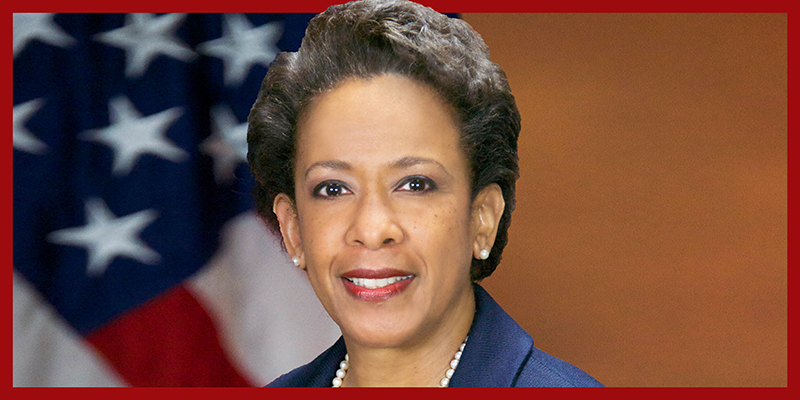
THE PENN POLITICAL UNION IS PROUD to welcome former Attorney General LORETTA LYNCH for the inaugural event of its 2021-2022 series of debates and discussions. The first female African American Attorney General of the United States, appointed by President Barack Obama in 2015, Lynch also served as the head of the U.S. Attorney’s Office for the Eastern District of New York twice, under both President Clinton and President Obama. As both a prosecutor and reformer, she has a deep knowledge of the criminal justice system and its shortcomings. She spent years in the trenches rising through the ranks as a prosecutor, aggressively fighting terrorism, financial fraud and cybercrime – all while vigorously defending civil and human rights. As arguments over elections, racial justice, policing, and free expression take center stage in American politics, there are few public figures better positioned to have a dialogue with the ideologically diverse members of the PPU.
PPU - The Future of Justice in America (Loretta Lynch)
Perry World House, World Forum
3803 Locust Walk Map/Access
Please register here.
THE PENN POLITICAL UNION IS PROUD to welcome former Attorney General LORETTA LYNCH for the inaugural event of its 2021-2022 series of debates and discussions. The first female African American Attorney General of the United States, appointed by President Barack Obama in 2015, Lynch also served as the head of the U.S. Attorney’s Office for the Eastern District of New York twice, under both President Clinton and President Obama. As both a prosecutor and reformer, she has a deep knowledge of the criminal justice system and its shortcomings. She spent years in the trenches rising through the ranks as a prosecutor, aggressively fighting terrorism, financial fraud and cybercrime – all while vigorously defending civil and human rights. As arguments over elections, racial justice, policing, and free expression take center stage in American politics, there are few public figures better positioned to have a dialogue with the ideologically diverse members of the PPU.
