Past Events
Room 350, Ronald O. Perelman Center for Political Science and Economics (133 S. 36th Street)
Food provided / Free and open to the public
Katherine Culver (UPenn Dept. of Anthropology)
Transnational Rule-of-Law Talk and Democratic Devolution in Contemporary Cambodia
Irina Soboleva (Columbia Dept. of Political Science)
Straight to Action: The Effect of Individual Empowerment on Democratic Consolidation
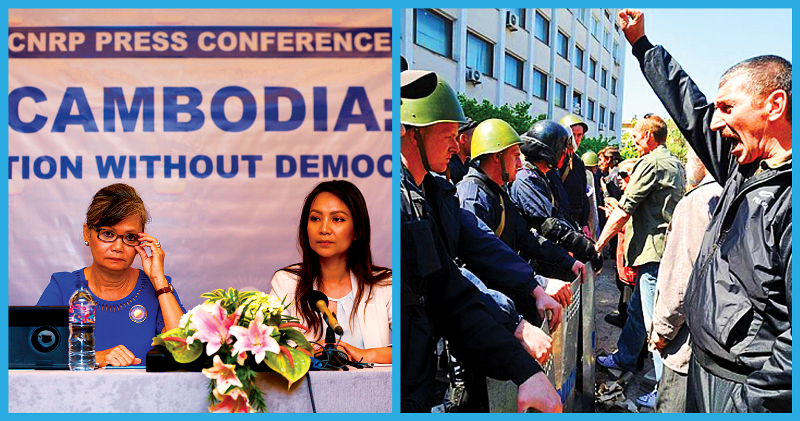
KATHERINE CULVER RAISES THE QUESTION OF WHEN, AND HOW, RULE-OF-LAW IDEOLOGIES associated with democratic governance and citizenship by donor countries might in fact support the legitimacy of authoritarian, or at least "illberally democratic" regimes, through a consideration of recent political events in Cambodia. In the decades following the devastation of the Khmer Rouge period, Cambodia was the recipient of considerable development aid aimed at building rule of law. Although Cambodians have enjoyed considerable social and economic development during this time, this development feels precarious to many observers because rule of law and a democratic political system have not yet materialized. In fact, several events since the 2013 elections, perhaps the high water mark of democracy in Cambodia, seem indicative of a decisive reversal of democratic political development. Perhaps most notably, a little over two years ago, on November 16, 2017, the Cambodian Supreme Court issued a pivotal decision which disbanded the main political opposition party. While this event was the subject of dire pronouncements on the part of international observers and a smattering of local journalists (who declared it the “death of democracy” in Cambodia), it was met with little internal resistance; and in subsequent national elections, the ruling party significantly increased its share of the vote. Given the widespread acceptance of rule-of-law ideas in Cambodia, this outcome suggests that the Supreme Court’s decision may be thinkable as consistent with rule of law for at least some Cambodians. Using recent examples of rule-of-law talk among Cambodian politicians, the paper examines how the transnational rule-of-law talk that has taken root in Cambodia may facilitate these apparently paradoxical political outcomes.
WHAT PROMPTS CITIZENS TO UNDERTAKE COSTLY CIVIC ACTIONS IN UNCONSOLIDATED DEMOCRACIES — their sense of individual agency or their sense of community? Despite the critical role civic engagement plays in democratic consolidation, few experimental studies have examined the underlying psychological motivations behind individual civic actions. Using an original experiment in Southeast Ukraine (N=1,381), IRINA SOBOLEVA demonstrates that individual empowerment constitutes a sufficient condition for civic engagement. Moreover, contrary to most theoretical expectations, both individual and collective empowerment cause a direct behavioral change in civic involvement irrespective of the change in attitudes and intentions. These results explain why recent experimental interventions failed to produce an attitudinal change in communities exposed to pro-democratic information. This paper contributes to our understanding of the underpinnings of civic culture by demonstrating that individual and collective empowerment form two distinct pillars of civic action. It also advances the theory of democratic learning by showing that democracies consolidate by providing opportunities for people to engage in various civic activities rather than inculcating democratic values through civic education and top-down democracy promotion.
GRAD WORKSHOP - Political Horizons and the Fruits of Frustration
Room 350, Ronald O. Perelman Center for Political Science and Economics (133 S. 36th Street)
Food provided / Free and open to the public
Katherine Culver (UPenn Dept. of Anthropology)
Transnational Rule-of-Law Talk and Democratic Devolution in Contemporary Cambodia
Irina Soboleva (Columbia Dept. of Political Science)
Straight to Action: The Effect of Individual Empowerment on Democratic Consolidation
KATHERINE CULVER RAISES THE QUESTION OF WHEN, AND HOW, RULE-OF-LAW IDEOLOGIES associated with democratic governance and citizenship by donor countries might in fact support the legitimacy of authoritarian, or at least "illberally democratic" regimes, through a consideration of recent political events in Cambodia. In the decades following the devastation of the Khmer Rouge period, Cambodia was the recipient of considerable development aid aimed at building rule of law. Although Cambodians have enjoyed considerable social and economic development during this time, this development feels precarious to many observers because rule of law and a democratic political system have not yet materialized. In fact, several events since the 2013 elections, perhaps the high water mark of democracy in Cambodia, seem indicative of a decisive reversal of democratic political development. Perhaps most notably, a little over two years ago, on November 16, 2017, the Cambodian Supreme Court issued a pivotal decision which disbanded the main political opposition party. While this event was the subject of dire pronouncements on the part of international observers and a smattering of local journalists (who declared it the “death of democracy” in Cambodia), it was met with little internal resistance; and in subsequent national elections, the ruling party significantly increased its share of the vote. Given the widespread acceptance of rule-of-law ideas in Cambodia, this outcome suggests that the Supreme Court’s decision may be thinkable as consistent with rule of law for at least some Cambodians. Using recent examples of rule-of-law talk among Cambodian politicians, the paper examines how the transnational rule-of-law talk that has taken root in Cambodia may facilitate these apparently paradoxical political outcomes.
WHAT PROMPTS CITIZENS TO UNDERTAKE COSTLY CIVIC ACTIONS IN UNCONSOLIDATED DEMOCRACIES — their sense of individual agency or their sense of community? Despite the critical role civic engagement plays in democratic consolidation, few experimental studies have examined the underlying psychological motivations behind individual civic actions. Using an original experiment in Southeast Ukraine (N=1,381), IRINA SOBOLEVA demonstrates that individual empowerment constitutes a sufficient condition for civic engagement. Moreover, contrary to most theoretical expectations, both individual and collective empowerment cause a direct behavioral change in civic involvement irrespective of the change in attitudes and intentions. These results explain why recent experimental interventions failed to produce an attitudinal change in communities exposed to pro-democratic information. This paper contributes to our understanding of the underpinnings of civic culture by demonstrating that individual and collective empowerment form two distinct pillars of civic action. It also advances the theory of democratic learning by showing that democracies consolidate by providing opportunities for people to engage in various civic activities rather than inculcating democratic values through civic education and top-down democracy promotion.

The Political History of a Bad Idea: The Rise of "Innovation" and the Fight against the New Deal (John Patrick Leary)
133 S. 36th Street, Room 250 (The Forum)
Ronald O. Perelman Center for Political Science and Economics

Hong Kong on the Brink: A Struggle for Survival (Nathan Law)
Hall of Flags, Houston Hall (Lower Level)
Open to Penn students, faculty, staff, alumni and affiliates; only those with valid Penn IDs will be admitted.

Forum (Room 250), Ronald O. Perelman Center for Political Science and Economics
Map / Accessibility / Refreshments Provided

Read the McEwen brothers' essay here.
IN MANY SOCIETIES, BUT ESPECIALLY IN THE UNITED STATES, the reverberations of inequality are felt most profoundly by children growing up in poverty. Poverty increases the risk that they will not be ready for school by age 5, will not complete high school, and will be poor as adults. A lack of high-quality pre-schools, secondary schools that are poorly funded and ineffective, challenging neighborhoods, and limited parental resources, among other variables, contribute to these odds. These factors are compounded, however, by the ways that inequality literally gets under the skin, as the toxic stress produced by poverty affects brain and bodily development in early childhood. Combining the perspectives of neuroscience and sociology, brothers BRUCE MCEWEN, head of the Harold and Margaret Milliken Hatch Laboratory of Neuroendocrinology at The Rockefeller University, and CRAIG MCEWEN, Emeritus Professor of Sociology at Bowdoin College, explore the feedback loops between social inequalities and biological responses to chronic stress, which create potentially life-long consequences for health and life trajectories. As much as neuroscience is key to understanding these effects, the sociological perspective cautions against too narrow a focus on biology. There is the risk of medicalization, which defines problems of adversity primarily as medical conditions requiring individual diagnosis and treatment. Sociological perspectives emphasize the social structures and practices that give rise to adversities and the resources that can protect against their potential impact on bodies and brains. This perspective turns attention to social policies to reduce adversities and to development of community resources to protect against them.
Read the McEwen brothers' essay here.
BRUCE MCEWEN is Alfred E. Mirsky Professor and head of the Harold and Margaret Milliken Hatch Laboratory of Neuroendocrinology at The Rockefeller University. A prominent neuroscientist, he leads research on the effects of sex, stress and hormones on the brain. In 1968, his laboratory discovered adrenal steroid receptors in the hippocampus — a truly seminal discovery. His current research focuses on how stress affects particular areas of the brain, including the amygdala, prefrontal cortex and hippocampus. He is also investigating how brain regions differ between men and women. Dr. McEwen’s research has significantly deepened our understanding of how the brain changes over the course of development, from childhood to old age, and it continues to shine new light upon the causes and progression of psychiatric illnesses, particularly post-traumatic stress disorder and depression.
CRAIG MCEWEN is Daniel B. Fayerweather Professor of Political Economy and Sociology Emeritus at Bowdoin College where he taught from 1975 to 2012. His early research examined community corrections in comparison to traditional incarceration for juveniles and resulted in a book, Designing Correctional Organizations for Youths. Over the next 25 years his research and commentary focused largely on mediation programs — small claims, community, corporate, family and general civil – and has been published widely in law reviews, social science journals and professional magazines. He is co-author of the treatise Mediation: Law, Policy, Practice (with Sarah Cole, Nancy Rogers, James Coben, and Peter N. Thompson). He also co-authored with Lynn Mather and Richard Maiman an empirical study of Divorce Lawyers at Work: Varieties of Professionalism in Practice. Most recently he co-authored Designing Systems and Processes for Managing Disputes with Nancy Rogers, Robert Bordone and Frank Sander.
Reverberations of Inequality - INEQUALITY AND EARLY CHILDHOOD ADVERSITY (Bruce and Craig McEwen)
Forum (Room 250), Ronald O. Perelman Center for Political Science and Economics
Map / Accessibility / Refreshments Provided
Read the McEwen brothers' essay here.
IN MANY SOCIETIES, BUT ESPECIALLY IN THE UNITED STATES, the reverberations of inequality are felt most profoundly by children growing up in poverty. Poverty increases the risk that they will not be ready for school by age 5, will not complete high school, and will be poor as adults. A lack of high-quality pre-schools, secondary schools that are poorly funded and ineffective, challenging neighborhoods, and limited parental resources, among other variables, contribute to these odds. These factors are compounded, however, by the ways that inequality literally gets under the skin, as the toxic stress produced by poverty affects brain and bodily development in early childhood. Combining the perspectives of neuroscience and sociology, brothers BRUCE MCEWEN, head of the Harold and Margaret Milliken Hatch Laboratory of Neuroendocrinology at The Rockefeller University, and CRAIG MCEWEN, Emeritus Professor of Sociology at Bowdoin College, explore the feedback loops between social inequalities and biological responses to chronic stress, which create potentially life-long consequences for health and life trajectories. As much as neuroscience is key to understanding these effects, the sociological perspective cautions against too narrow a focus on biology. There is the risk of medicalization, which defines problems of adversity primarily as medical conditions requiring individual diagnosis and treatment. Sociological perspectives emphasize the social structures and practices that give rise to adversities and the resources that can protect against their potential impact on bodies and brains. This perspective turns attention to social policies to reduce adversities and to development of community resources to protect against them.
Read the McEwen brothers' essay here.
BRUCE MCEWEN is Alfred E. Mirsky Professor and head of the Harold and Margaret Milliken Hatch Laboratory of Neuroendocrinology at The Rockefeller University. A prominent neuroscientist, he leads research on the effects of sex, stress and hormones on the brain. In 1968, his laboratory discovered adrenal steroid receptors in the hippocampus — a truly seminal discovery. His current research focuses on how stress affects particular areas of the brain, including the amygdala, prefrontal cortex and hippocampus. He is also investigating how brain regions differ between men and women. Dr. McEwen’s research has significantly deepened our understanding of how the brain changes over the course of development, from childhood to old age, and it continues to shine new light upon the causes and progression of psychiatric illnesses, particularly post-traumatic stress disorder and depression.
CRAIG MCEWEN is Daniel B. Fayerweather Professor of Political Economy and Sociology Emeritus at Bowdoin College where he taught from 1975 to 2012. His early research examined community corrections in comparison to traditional incarceration for juveniles and resulted in a book, Designing Correctional Organizations for Youths. Over the next 25 years his research and commentary focused largely on mediation programs — small claims, community, corporate, family and general civil – and has been published widely in law reviews, social science journals and professional magazines. He is co-author of the treatise Mediation: Law, Policy, Practice (with Sarah Cole, Nancy Rogers, James Coben, and Peter N. Thompson). He also co-authored with Lynn Mather and Richard Maiman an empirical study of Divorce Lawyers at Work: Varieties of Professionalism in Practice. Most recently he co-authored Designing Systems and Processes for Managing Disputes with Nancy Rogers, Robert Bordone and Frank Sander.

Room 350, Ronald O. Perelman Center for Political Science and Economics (133 S. 36th Street)
Food provided / Free and open to the public
Raven Brown (New School Public and Urban Policy)
Inequality During the Era of Democracy: Institutional and Economic Conflicts in the Post-Apartheid State
Francis Russo (Penn History)
Rights vs. Duties: The Grimké Sisters from South Carolina
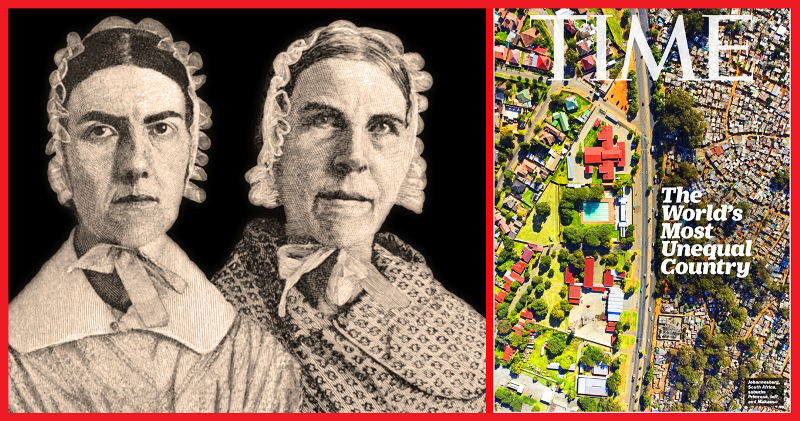
Peter Evans has argued that a central responsibility of the state, with regard to social and economic development, is that of arbiter of justice. In her paper, RAVEN BROWN argues that the inherent tension between the universal rights enshrined in South Africa’s constitution and its neoliberal macroeconomic policies prevents the state from carrying this responsibility to its citizens. South Africa’s persistent socio-structural inequality and high levels of unemployment has undermined the ability of the state to mete out justice, through inhibiting access to social and economic equity for the majority, as concentration of wealth and power is correlated with increased inequality. South Africa’s post-apartheid experience highlights the inability of neoliberalism and democracy to provide access to social and economic justice, which then prevents access to full citizenship. Because neoliberalism can be seen as antithetical to democracy, South Africa’s institutions have been unable to provide equal access of opportunity, manifesting in unmet political expectations, which serves to impair social buy-in, and thus, the stability of the state. The failure to reform institutions has thus led to the reproduction of apartheid era patterns of structural inequality, which has ultimately stymied equitable growth and eroded the promises of democracy.
In his paper, FRANCIS RUSSO explores what a history of duty in the United States might look like by exploring the ideas of famous abolitionists and feminists Sarah and Angelina Grimké. Active in the 1830s, the Grimkés defy a neat narrative of “rights-talk” as the normative political discourse in U.S. emancipatory movements. By putting duties at the center of their theology, feminism, and abolitionism and rights only as a lesser corollary, the Grimke sisters provide a window into a lost history of citizenship and political activism defined by duty, hard to see from the twenty-first century’s overwhelming emphasis on human rights. The paper will also briefly sketch the Grimke sisters in a larger history of duty in the United States and beyond. Edmund Burke’s reaction to the French Revolution seemed to sum up the traditionalist standpoint on “duty” at modern democracy’s outset: rights are well and good, but what about the duties upon which rights must rest? Thomas Paine issued a stern reply in The Rights of Man (1791). “A Declaration of Rights is, by reciprocity, a Declaration of Duties also. Whatever is my right as a man is also the right of another, and it becomes my duty to guarantee as well as to possess.” Yet as the Age of Revolution’s Christian and republican inheritance faded and new forms of industrialized capitalism transformed social and economic organization, the assertive and unfettered individualism born of rights-talk jettisoned the commands of duty as it rode heedlessly into its laissez-faire transmutations. But this transformation was never total. Some thinkers such as T.H. Breen, John Dewey, and others sought to save liberalism from its own perversions by reclaiming duties.
GRAD WORKSHOP - Dutiful Citizens and Responsible States
Room 350, Ronald O. Perelman Center for Political Science and Economics (133 S. 36th Street)
Food provided / Free and open to the public
Raven Brown (New School Public and Urban Policy)
Inequality During the Era of Democracy: Institutional and Economic Conflicts in the Post-Apartheid State
Francis Russo (Penn History)
Rights vs. Duties: The Grimké Sisters from South Carolina
Peter Evans has argued that a central responsibility of the state, with regard to social and economic development, is that of arbiter of justice. In her paper, RAVEN BROWN argues that the inherent tension between the universal rights enshrined in South Africa’s constitution and its neoliberal macroeconomic policies prevents the state from carrying this responsibility to its citizens. South Africa’s persistent socio-structural inequality and high levels of unemployment has undermined the ability of the state to mete out justice, through inhibiting access to social and economic equity for the majority, as concentration of wealth and power is correlated with increased inequality. South Africa’s post-apartheid experience highlights the inability of neoliberalism and democracy to provide access to social and economic justice, which then prevents access to full citizenship. Because neoliberalism can be seen as antithetical to democracy, South Africa’s institutions have been unable to provide equal access of opportunity, manifesting in unmet political expectations, which serves to impair social buy-in, and thus, the stability of the state. The failure to reform institutions has thus led to the reproduction of apartheid era patterns of structural inequality, which has ultimately stymied equitable growth and eroded the promises of democracy.
In his paper, FRANCIS RUSSO explores what a history of duty in the United States might look like by exploring the ideas of famous abolitionists and feminists Sarah and Angelina Grimké. Active in the 1830s, the Grimkés defy a neat narrative of “rights-talk” as the normative political discourse in U.S. emancipatory movements. By putting duties at the center of their theology, feminism, and abolitionism and rights only as a lesser corollary, the Grimke sisters provide a window into a lost history of citizenship and political activism defined by duty, hard to see from the twenty-first century’s overwhelming emphasis on human rights. The paper will also briefly sketch the Grimke sisters in a larger history of duty in the United States and beyond. Edmund Burke’s reaction to the French Revolution seemed to sum up the traditionalist standpoint on “duty” at modern democracy’s outset: rights are well and good, but what about the duties upon which rights must rest? Thomas Paine issued a stern reply in The Rights of Man (1791). “A Declaration of Rights is, by reciprocity, a Declaration of Duties also. Whatever is my right as a man is also the right of another, and it becomes my duty to guarantee as well as to possess.” Yet as the Age of Revolution’s Christian and republican inheritance faded and new forms of industrialized capitalism transformed social and economic organization, the assertive and unfettered individualism born of rights-talk jettisoned the commands of duty as it rode heedlessly into its laissez-faire transmutations. But this transformation was never total. Some thinkers such as T.H. Breen, John Dewey, and others sought to save liberalism from its own perversions by reclaiming duties.
