Past Events
Room 350, Ronald O. Perelman Center for Political Science and Economics (133 S. 36th Street)
Food provided / Free and open to the public
Hala Habib (New School Dept. of Anthropology)
Between States of Matter: Kabul and Its Concrete Problem
Angus McLeod (Penn Dept. of History)
Redeeming Schools: Public Education in Post Civil-War Texas
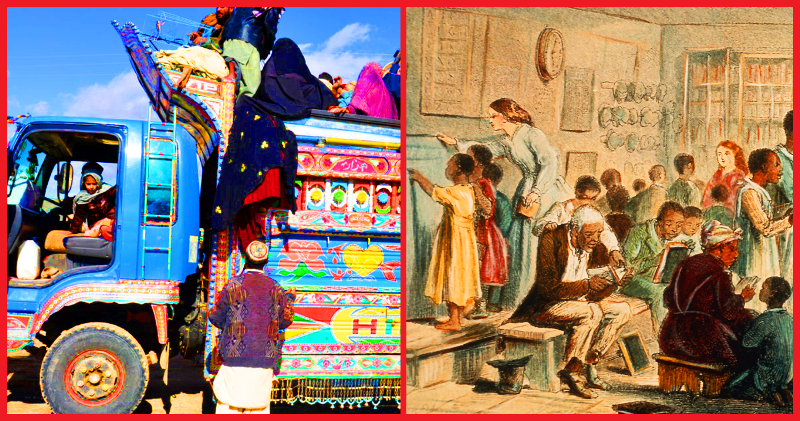
In HALA HABIB’s work on the repatriation program initiated by the government of Pakistan and the United Nations High Commission for Refugees for Afghan refugees to return to Afghanistan, she looks at the homes of the repatriated as biographical agents in the democratization process of the post-Taliban state. The story of the democratic order is as much a story of materials as it is of people. In the making of citizens, specific “attachments” to material manufacture and technological use is set into motion and amplified, what Michael Callon has named “agencements” (or socio-technical assemblages) and Arjun Appadurai has called for the study of as “the social life of things.” Habib explores how these materials conform imperfectly with the development schemes of the global world order. In Afghanistan, the “good” versus “bad” repatriate is dictated by who weathers Kabul as a local, or Kabuli, and who does not. Habib seeks to investigate what kind of testimony and agency is produced by the materials used to house some of the repatriated in order to engage with the question of what marks the difference between locals and non-locals in the context of war and displacement. In the process, she also asks how, if Afghanistan is flagged by State travel advisories as the site of on-going conflict, it has simultaneously become a “post”-war country eligible to receive repatriated citizens?
In 1871, former Confederates and Democratic politicians rallied together in Austin, Texas to protest the state’s reconstruction government. Conservative leaders drew protestors under the banner of a “Taxpayers’ Convention” to oppose the state government’s allegedly extravagant spending, and to attack policies of racial equality. Almost a century and a half before the Obama-era Tea Party, Texas’ political elite mobilized against a profligate, racially progressive governor, putting schools at the center of their partisan, anti-tax campaign. In his paper, ANGUS MCLEOD explores how this “Taxpayers’ Convention” reveals the centrality of public schools as a political flashpoint between Radical Republicans attempting to construct a new society built on politically active Freedmen, and Bourbon Democrats who wanted to return to a proto-feudal system centered on planter dominance, labor control, and indebtedness. Schools became one of the most visible manifestations of the Republican political project and opposition to schools and their concomitant taxes became the central plank of the reformulated Democracy. Schools also served as one of the most prominent and visible aspects of a state government largely hidden “out of sight.” For many citizens, the Republican-crafted school system was their first interaction with the state government. The public school system represented a major expansion of state power that had been almost wholly absent in the South. McLeod contextualizes Texas’ Reconstruction-era public school system to show how state institutions have developed over time and to explain the politicization of those institutions in a highly partisan period. Reconstruction necessarily pulls in race, economic inequality, social hierarchies, and mass political movements, and all of these feature prominently in the struggle over schooling. The failure of the Republican effort to create a robust public school system reverberated through the state of Texas and set a pattern in which schools served as a contested site for political battles over taxation, racial equality, and economic control.
GRAD WORKSHOP - Contesting Democratic Equality through Material (Re)construction
Room 350, Ronald O. Perelman Center for Political Science and Economics (133 S. 36th Street)
Food provided / Free and open to the public
Hala Habib (New School Dept. of Anthropology)
Between States of Matter: Kabul and Its Concrete Problem
Angus McLeod (Penn Dept. of History)
Redeeming Schools: Public Education in Post Civil-War Texas
In HALA HABIB’s work on the repatriation program initiated by the government of Pakistan and the United Nations High Commission for Refugees for Afghan refugees to return to Afghanistan, she looks at the homes of the repatriated as biographical agents in the democratization process of the post-Taliban state. The story of the democratic order is as much a story of materials as it is of people. In the making of citizens, specific “attachments” to material manufacture and technological use is set into motion and amplified, what Michael Callon has named “agencements” (or socio-technical assemblages) and Arjun Appadurai has called for the study of as “the social life of things.” Habib explores how these materials conform imperfectly with the development schemes of the global world order. In Afghanistan, the “good” versus “bad” repatriate is dictated by who weathers Kabul as a local, or Kabuli, and who does not. Habib seeks to investigate what kind of testimony and agency is produced by the materials used to house some of the repatriated in order to engage with the question of what marks the difference between locals and non-locals in the context of war and displacement. In the process, she also asks how, if Afghanistan is flagged by State travel advisories as the site of on-going conflict, it has simultaneously become a “post”-war country eligible to receive repatriated citizens?
In 1871, former Confederates and Democratic politicians rallied together in Austin, Texas to protest the state’s reconstruction government. Conservative leaders drew protestors under the banner of a “Taxpayers’ Convention” to oppose the state government’s allegedly extravagant spending, and to attack policies of racial equality. Almost a century and a half before the Obama-era Tea Party, Texas’ political elite mobilized against a profligate, racially progressive governor, putting schools at the center of their partisan, anti-tax campaign. In his paper, ANGUS MCLEOD explores how this “Taxpayers’ Convention” reveals the centrality of public schools as a political flashpoint between Radical Republicans attempting to construct a new society built on politically active Freedmen, and Bourbon Democrats who wanted to return to a proto-feudal system centered on planter dominance, labor control, and indebtedness. Schools became one of the most visible manifestations of the Republican political project and opposition to schools and their concomitant taxes became the central plank of the reformulated Democracy. Schools also served as one of the most prominent and visible aspects of a state government largely hidden “out of sight.” For many citizens, the Republican-crafted school system was their first interaction with the state government. The public school system represented a major expansion of state power that had been almost wholly absent in the South. McLeod contextualizes Texas’ Reconstruction-era public school system to show how state institutions have developed over time and to explain the politicization of those institutions in a highly partisan period. Reconstruction necessarily pulls in race, economic inequality, social hierarchies, and mass political movements, and all of these feature prominently in the struggle over schooling. The failure of the Republican effort to create a robust public school system reverberated through the state of Texas and set a pattern in which schools served as a contested site for political battles over taxation, racial equality, and economic control.

Climate Justice and Environmental Citizenship
133 S. 36th Street, Auditorium (Lower Level)
Ronald O. Perelman Center for Political Science and Economics
Free and open to the public / Food provided
Co-sponsored Event: RENOVATING DEMOCRACY in an Era of Populism, Inequality and Global Competition (Panel)
Perry World House, 3803 Locust Walk
Reception to follow
PLEASE REGISTER HERE.
THE RISE OF POPULISM IN THE WEST and the rise of China in the East have triggered a worldwide rethink of how democracies work—but also how they can fail. NICOLAS BERGGRUEN and NATHAN GARDELS are cofounders of the Berggruen Institute, committed to developing new ideas about how to reshape political and social institutions at a time of change, and authors of the new book Renovating Democracy.
Join Penn President AMY GUTMANN, Perry World House and the Andrea Mitchell Center in an exciting conversation with Berggruen and Gardels, as they discuss how democracies can respond to the ways globalism and digital capitalism have deepened the divide between rich and poor, challenged the social contract, and tested domestic and global institutions. Perry World House Visiting Fellow and Philadelphia Inquirer Worldview Columnist TRUDY RUBIN moderates.
Opening Conference - Reverberations of Inequality
3501 Sansom Street, Michael A. Fitts Auditorium
Penn Law, Golkin Hall Lower Level
Lunch provided
Please register at inequality-conference.eventbrite.com
9:00-10:40 AM – Panel 1: Health and Inequality
Chloe E. Bird, Rand Corporation
Elaine Hernandez, Indiana University Bloomington
Bruce Link, University of California, Riverside
11:00 AM-12:40 AM – Panel 2: Barriers to Mobility
Sam Friedman, London School of Economics
Michael Kraus, Yale University
Karolyn Tyson, University of North Carolina at Chapel Hill
1:30-3:00 PM – Keynote Address
Raj Chetty, Harvard University
3:20-5:00 PM – Panel 3: Policy Responses to Inequality
David Daley, Activist and author of Ratf**
Susan Dynarski, University of Michigan
Brishen Rogers, Georgetown Law
5:00-5:30 PM – Reception
Room 350, Ronald O. Perelman Center for Political Science and Economics (133 S. 36th Street)
Food provided / Free and open to the public
Matthew Graham (Yale Political Science)
Democracy in America? Partisanship, Polarization, and the Robustness of Support for Democracy in the U.S.
Co-authored with Milan W. Svolik
Sushmita Sircar (NYU Dept. of English)
Military Cosmopolitanism and Romantic Indigeneity: Crafting Claims to Statehood in India’s North-Eastern Frontier
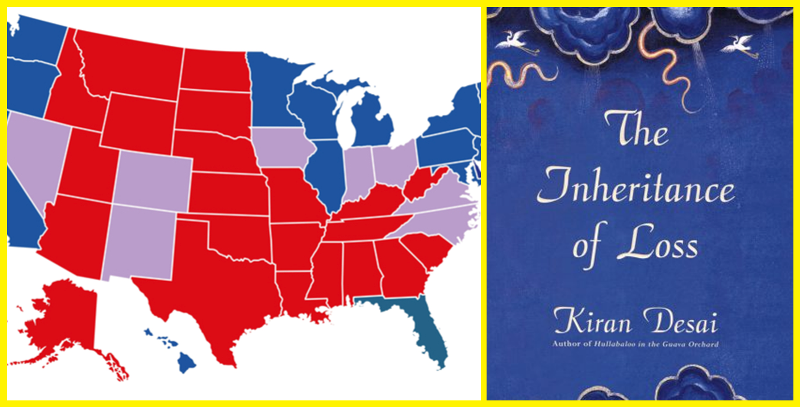
Is support for democracy in the United States robust enough to deter undemocratic behavior by elected politicians? MATTHEW GRAHAM and his co-author Milan W. Svolik develop a model of the public as a democratic check and evaluates it using two empirical strategies: an original, nationally representative candidate choice experiment in which some politicians take positions that violate key democratic principles, and a natural experiment that occurred during Montana’s 2017 special election for the U.S. House. Their research design allows him to infer Americans’ willingness to trade off democratic principles for other valid but potentially conflicting considerations such as political ideology, partisan loyalty, and policy preferences. They finds the U.S. public’s viability as a democratic check to be strikingly limited. Only a small fraction of Americans prioritize democratic principles in their electoral choices and their tendency to do so is decreasing in several measures of polarization, including the strength of partisanship, policy extremism, and candidate platform divergence. Graham and Svolik's findings echo classic arguments about the importance of political moderation and cross-cutting cleavages for democratic stability and highlight the dangers that polarization represents for democracy.
SUSHMITA SIRCAR examines how secessionist movements in India’s north-eastern frontier negotiate two competing foundations of nationhood: a cosmopolitan military identity forged through the two world wars, and an indigenous identity based on a claim to the land. The world wars, by recruiting people from the region for the British Army, and through the invasion of the region by the Japanese Army, led to the emergence of various “militant nationalisms,” which transformed previously anthropological categories into ethnic minorities that mobilized against the state. These movements undertook a complex reworking of the figure of the “soldier,” central to so many accounts of national integrity, that in turn remade their minor nationalisms around on an ideal of military brotherhood. This is visible in Kiran Desai’s The Inheritance of Loss (2006), which depicts the Gorkhaland uprising of the 1980s in the Kalimpong district of West Bengal, and in Easterine Kire’s Bitter Wormwood (2011), which describes the Naga peoples’ traditional way of life against the backdrop of attempts to declare independence from the Indian state. Sircar argues that state documents and contemporary literature efface the legitimacy of such a “militant nationalism” by juxtaposing it to an indigenous identity. This bias also explains why the region is subsequently granted autonomy under the Sixth Schedule of the Indian Constitution, which sets out provisions for the “Administration of Tribal Areas.” Reproducing the nationalist logic of the Indian state, the aforementioned novels more readily recognize an “indigenous” identity based on a claim to the land as the political basis of nationhood. Hence, these novels reveal how certain narratives of nation formation become the only legitimate means for making claims to political rights and independent statehood over the course of the twentieth century.
GRAD WORKSHOP - Taken for Granted? Challenging the Foundations of Nationhood Through Narrative and Practice
Room 350, Ronald O. Perelman Center for Political Science and Economics (133 S. 36th Street)
Food provided / Free and open to the public
Matthew Graham (Yale Political Science)
Democracy in America? Partisanship, Polarization, and the Robustness of Support for Democracy in the U.S.
Co-authored with Milan W. Svolik
Sushmita Sircar (NYU Dept. of English)
Military Cosmopolitanism and Romantic Indigeneity: Crafting Claims to Statehood in India’s North-Eastern Frontier
Is support for democracy in the United States robust enough to deter undemocratic behavior by elected politicians? MATTHEW GRAHAM and his co-author Milan W. Svolik develop a model of the public as a democratic check and evaluates it using two empirical strategies: an original, nationally representative candidate choice experiment in which some politicians take positions that violate key democratic principles, and a natural experiment that occurred during Montana’s 2017 special election for the U.S. House. Their research design allows him to infer Americans’ willingness to trade off democratic principles for other valid but potentially conflicting considerations such as political ideology, partisan loyalty, and policy preferences. They finds the U.S. public’s viability as a democratic check to be strikingly limited. Only a small fraction of Americans prioritize democratic principles in their electoral choices and their tendency to do so is decreasing in several measures of polarization, including the strength of partisanship, policy extremism, and candidate platform divergence. Graham and Svolik's findings echo classic arguments about the importance of political moderation and cross-cutting cleavages for democratic stability and highlight the dangers that polarization represents for democracy.
SUSHMITA SIRCAR examines how secessionist movements in India’s north-eastern frontier negotiate two competing foundations of nationhood: a cosmopolitan military identity forged through the two world wars, and an indigenous identity based on a claim to the land. The world wars, by recruiting people from the region for the British Army, and through the invasion of the region by the Japanese Army, led to the emergence of various “militant nationalisms,” which transformed previously anthropological categories into ethnic minorities that mobilized against the state. These movements undertook a complex reworking of the figure of the “soldier,” central to so many accounts of national integrity, that in turn remade their minor nationalisms around on an ideal of military brotherhood. This is visible in Kiran Desai’s The Inheritance of Loss (2006), which depicts the Gorkhaland uprising of the 1980s in the Kalimpong district of West Bengal, and in Easterine Kire’s Bitter Wormwood (2011), which describes the Naga peoples’ traditional way of life against the backdrop of attempts to declare independence from the Indian state. Sircar argues that state documents and contemporary literature efface the legitimacy of such a “militant nationalism” by juxtaposing it to an indigenous identity. This bias also explains why the region is subsequently granted autonomy under the Sixth Schedule of the Indian Constitution, which sets out provisions for the “Administration of Tribal Areas.” Reproducing the nationalist logic of the Indian state, the aforementioned novels more readily recognize an “indigenous” identity based on a claim to the land as the political basis of nationhood. Hence, these novels reveal how certain narratives of nation formation become the only legitimate means for making claims to political rights and independent statehood over the course of the twentieth century.
