Past Events
Room 350, Ronald O. Perelman Center for Political Science and Economics (133 S. 36th Street)
Food provided / Free and open to the public
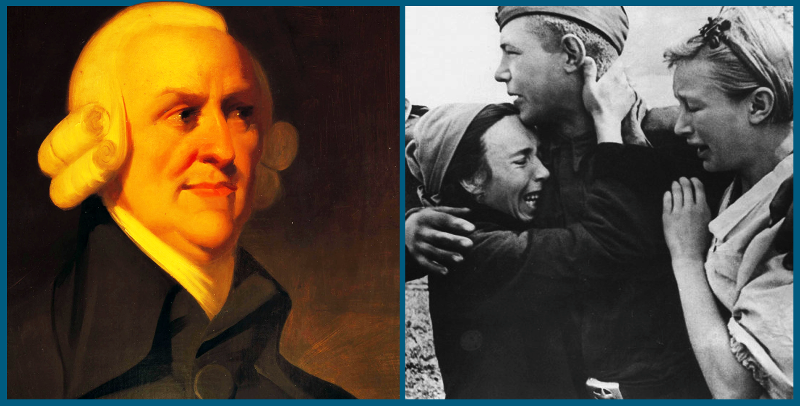
Kristen Collins (Georgetown University Political Science)
"Eager to Look: Anxiety of Being Seen Adam Smith's Theory of Moral Sentiments"
Kelsey Norris (Penn Department of History)
"The Humanitarian Dimensions of Soviet Propaganda and State Surveillance: Reuniting War-torn Soviet Families in the War-Devastated USSR"
In order to make sense of Adam Smith’s theory regarding the development of conscience, scholars such as Fonna Forman-Barzilai have compared it to Michel Foucault’s theory of the disciplinary power of surveillance in forming the non-violent individual of modern political communities. While there are important similarities between Foucault’s theory of the power of surveillance to discipline the behavior of those who are seen and the socializing aspects of Smith’s theory of the impartial spectator, mapping Foucault’s model onto Smith’s theory elides crucial aspects of Smith’s concerns regarding how different individuals experience the gaze of actual spectators. Embedded within Theory of Moral Sentiments is an account of the harms that forced public exposure perpetuates against individuals. To retrieve this account, KRISTEN COLLINS analyzes three cases within Smith’s work where he reveals sensitivity to the harmful effects of actual spectators on an individual and the inner impartial spectator: the innocent man accused of a crime he did not commit, impoverished members of society, and individuals who desire private confession despite not being guilty of committing injustice. To further draw out the potential relevance of Smith’s insights for our time, Collins puts his philosophy in conversation with Khiara M. Bridges’ investigation of poor women’s lack of privacy, particularly in their experiences with state Medicaid regulations, in The Poverty of Privacy Rights.
KELSEY NORRIS's research on Soviet displaced persons and the politics of family reunification in the World War II-era and postwar USSR explores how millions of Soviet citizens attempted to trace their family members who they lost contact with during the conflict and considers how the Soviet regime responded to this crisis of war-torn Soviet families. This paper analyzes the Soviet regime’s wartime efforts to help Soviet citizens reestablish contact with their missing relatives and explores how apparatuses of state surveillance and population control were mobilized to provide this crucial humanitarian aid to Soviet citizens. Based on analysis of a wartime radio program and tracing bureau that helped Soviet citizens trace their family members, Norris argues that Soviet officials adopted these measures in an effort to boost wartime morale and to convey that even in the context of total war and mass population displacement, the regime remained committed to its citizens' personal well-being and could continue to surveil and maintain control over its domestic population. While these institutions were also intended to cultivate citizens’ sense of indebtedness to the state, they actually became the focus of citizens’ ire due to their lackluster success rate in reuniting war-torn families.
GRAD WORKSHOP - Surveillance and Public Identity
Room 350, Ronald O. Perelman Center for Political Science and Economics (133 S. 36th Street)
Food provided / Free and open to the public
Kristen Collins (Georgetown University Political Science)
"Eager to Look: Anxiety of Being Seen Adam Smith's Theory of Moral Sentiments"
Kelsey Norris (Penn Department of History)
"The Humanitarian Dimensions of Soviet Propaganda and State Surveillance: Reuniting War-torn Soviet Families in the War-Devastated USSR"
In order to make sense of Adam Smith’s theory regarding the development of conscience, scholars such as Fonna Forman-Barzilai have compared it to Michel Foucault’s theory of the disciplinary power of surveillance in forming the non-violent individual of modern political communities. While there are important similarities between Foucault’s theory of the power of surveillance to discipline the behavior of those who are seen and the socializing aspects of Smith’s theory of the impartial spectator, mapping Foucault’s model onto Smith’s theory elides crucial aspects of Smith’s concerns regarding how different individuals experience the gaze of actual spectators. Embedded within Theory of Moral Sentiments is an account of the harms that forced public exposure perpetuates against individuals. To retrieve this account, KRISTEN COLLINS analyzes three cases within Smith’s work where he reveals sensitivity to the harmful effects of actual spectators on an individual and the inner impartial spectator: the innocent man accused of a crime he did not commit, impoverished members of society, and individuals who desire private confession despite not being guilty of committing injustice. To further draw out the potential relevance of Smith’s insights for our time, Collins puts his philosophy in conversation with Khiara M. Bridges’ investigation of poor women’s lack of privacy, particularly in their experiences with state Medicaid regulations, in The Poverty of Privacy Rights.
KELSEY NORRIS's research on Soviet displaced persons and the politics of family reunification in the World War II-era and postwar USSR explores how millions of Soviet citizens attempted to trace their family members who they lost contact with during the conflict and considers how the Soviet regime responded to this crisis of war-torn Soviet families. This paper analyzes the Soviet regime’s wartime efforts to help Soviet citizens reestablish contact with their missing relatives and explores how apparatuses of state surveillance and population control were mobilized to provide this crucial humanitarian aid to Soviet citizens. Based on analysis of a wartime radio program and tracing bureau that helped Soviet citizens trace their family members, Norris argues that Soviet officials adopted these measures in an effort to boost wartime morale and to convey that even in the context of total war and mass population displacement, the regime remained committed to its citizens' personal well-being and could continue to surveil and maintain control over its domestic population. While these institutions were also intended to cultivate citizens’ sense of indebtedness to the state, they actually became the focus of citizens’ ire due to their lackluster success rate in reuniting war-torn families.

College Hall, Room 200
Free and open to the public
Co-sponsored by the Pi Sigma Alpha Political Science Honor Society, The Jack Miller Center, and the Penn Wharton Public Policy Initiative.
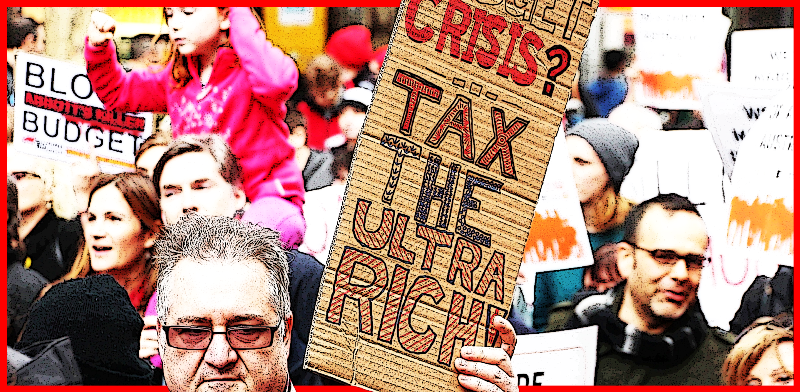
Join the five parties of the Penn Political Union for an impassioned debate as they consider the following resolution:
“The US Federal Government should implement a 70% top marginal tax rate."
PPU Debate - Is a Top Tax Rate of 70% a Good Idea?
College Hall, Room 200
Free and open to the public
Co-sponsored by the Pi Sigma Alpha Political Science Honor Society, The Jack Miller Center, and the Penn Wharton Public Policy Initiative.
Join the five parties of the Penn Political Union for an impassioned debate as they consider the following resolution:
“The US Federal Government should implement a 70% top marginal tax rate."

133 S. 36th Street, Room 250 (Forum) Map / Accessibility
Ronald O. Perelman Center for Political Science and Economics
Co-sponsor: Center for the Study of Contemporary China
Open to the Public / Refreshments Provided

Carl Minzner, Fordham University School of Law
Moderator: Neysun Mahboubi, Center for the Study of Contemporary China
AFTER YEARS OF DEFYING THE CONVENTIONAL WISDOM that a more open economy would bring about democratic reforms, will that failure – and indeed its more recent turn to greater authoritarianism under Xi Jinping – ultimately hamper China’s continuing rise as an economic and global power?
Is China's Authoritarian Revival Undermining Its Rise? (Carl Minzner)
133 S. 36th Street, Room 250 (Forum) Map / Accessibility
Ronald O. Perelman Center for Political Science and Economics
Co-sponsor: Center for the Study of Contemporary China
Open to the Public / Refreshments Provided
Carl Minzner, Fordham University School of Law
Moderator: Neysun Mahboubi, Center for the Study of Contemporary China
AFTER YEARS OF DEFYING THE CONVENTIONAL WISDOM that a more open economy would bring about democratic reforms, will that failure – and indeed its more recent turn to greater authoritarianism under Xi Jinping – ultimately hamper China’s continuing rise as an economic and global power?

Asians, Blacks, and Affirmative Action (A Conversation Led by Claire Jean Kim)
Fisher-Bennett Hall, Room 231
Free and open to the public/ Food provided
PLEASE REGISTER HERE
READ AN ESSAY BY PROF. KIM HERE

133 S. 36th Street, Room 250 (Forum) Map / Accessibility
Ronald O. Perelman Center for Political Science and Economics
Open to the Public / Refreshments Provided
Co-sponsored by the Center for Media at Risk
PLEASE REGISTER HERE
Pablo Boczkowski, Northwestern University
Zizi Papacharissi, University of Illinois-Chicago
Jay Rosen, New York University
Claire Wardle, First Draft
Moderator: Mitchell Orenstein, Annenberg School for Communications
HAS DONALD TRUMP, HIS PRESIDENTIAL CAMPAIGN, and his Twitter feed transformed American media, or has he simply revealed transformations that were already well underway? And if there is no way of “changing it back,” how should we attempt to reform the media going forward?
PLEASE REGISTER HERE
Has Trump Changed the Media? (Roundtable)
133 S. 36th Street, Room 250 (Forum) Map / Accessibility
Ronald O. Perelman Center for Political Science and Economics
Open to the Public / Refreshments Provided
Co-sponsored by the Center for Media at Risk
PLEASE REGISTER HERE
Pablo Boczkowski, Northwestern University
Zizi Papacharissi, University of Illinois-Chicago
Jay Rosen, New York University
Claire Wardle, First Draft
Moderator: Mitchell Orenstein, Annenberg School for Communications
HAS DONALD TRUMP, HIS PRESIDENTIAL CAMPAIGN, and his Twitter feed transformed American media, or has he simply revealed transformations that were already well underway? And if there is no way of “changing it back,” how should we attempt to reform the media going forward?
PLEASE REGISTER HERE
