Past Events
Forum (Room 250), Ronald O. Perelman Center for Political Science and Economics
Map / Accessibility

PLEASE REGISTER HERE
ESSAYS BY PANELISTS HERE
Ari Berman, Mother Jones
Siva Vaidhyanathan, University of Virginia
Moderator: Marc Meredith, University of Pennsylvania
IN THE WAKE OF THE SUPREME COURT'S rollback of supervision under the Voting Rights Act, and in light of controversies in Georgia, Florida and elsewhere over voting access during the midterms, how should we assess the impact of widespread efforts to limit the franchise?
PLEASE REGISTER HERE
ESSAYS BY PANELISTS HERE
Is America Becoming Less Democratic? (Ari Berman and Siva Vaidhyanathan)
Forum (Room 250), Ronald O. Perelman Center for Political Science and Economics
Map / Accessibility
PLEASE REGISTER HERE
ESSAYS BY PANELISTS HERE
Ari Berman, Mother Jones
Siva Vaidhyanathan, University of Virginia
Moderator: Marc Meredith, University of Pennsylvania
IN THE WAKE OF THE SUPREME COURT'S rollback of supervision under the Voting Rights Act, and in light of controversies in Georgia, Florida and elsewhere over voting access during the midterms, how should we assess the impact of widespread efforts to limit the franchise?
PLEASE REGISTER HERE
ESSAYS BY PANELISTS HERE

College Hall, Room 200
Food Provided / Free and open to the public
Co-sponsored by the Pi Sigma Alpha Political Science Honor Society, The Jack Miller Center, and the Penn Wharton Public Policy Initiative.

Join the five parties of the Penn Political Union and guest speaker George Ciccariello-Maher (author of We Created Chavez, Building the Commune, and Decolonizing Dialectics) for an impassioned debate as they consider the following resolution:
"The United States has had an overall negative impact on the world."
PPU Debate - Has America Been a Net Harm to the World? (With George Ciccariello-Maher)
College Hall, Room 200
Food Provided / Free and open to the public
Co-sponsored by the Pi Sigma Alpha Political Science Honor Society, The Jack Miller Center, and the Penn Wharton Public Policy Initiative.
Join the five parties of the Penn Political Union and guest speaker George Ciccariello-Maher (author of We Created Chavez, Building the Commune, and Decolonizing Dialectics) for an impassioned debate as they consider the following resolution:
"The United States has had an overall negative impact on the world."

World Forum, Perry World House (3803 Locust Walk) Map / Accessibility
Co-sponsored by The Penn-Temple European Studies Colloquium and Penn Africana Studies
PLEASE REGISTER HERE
ESSAYS BY PANELISTS AVAILABLE HERE
P.J. Brendese, Johns Hopkins University
Ariane Chebel D’Appollonia, Sciences Po and Rutgers University
Elizabeth F. Cohen, Syracuse University
Moderator: Osman Balkan, Swarthmore College
Despite the many positive impacts of immigration on the health of democracies, do the xenophobic movements destabilizing politics throughout the world indicate a limit on the amount of migration liberal democracies can absorb?
PLEASE REGISTER HERE
ESSAYS BY PANELISTS AVAILABLE HERE
Is Immigration Good or Bad for Democracy?
World Forum, Perry World House (3803 Locust Walk) Map / Accessibility
Co-sponsored by The Penn-Temple European Studies Colloquium and Penn Africana Studies
PLEASE REGISTER HERE
ESSAYS BY PANELISTS AVAILABLE HERE
P.J. Brendese, Johns Hopkins University
Ariane Chebel D’Appollonia, Sciences Po and Rutgers University
Elizabeth F. Cohen, Syracuse University
Moderator: Osman Balkan, Swarthmore College
Despite the many positive impacts of immigration on the health of democracies, do the xenophobic movements destabilizing politics throughout the world indicate a limit on the amount of migration liberal democracies can absorb?
PLEASE REGISTER HERE
ESSAYS BY PANELISTS AVAILABLE HERE

Room 350, Ronald O. Perelman Center for Political Science and Economics (133 S. 36th Street)
Food provided / Free and open to the public
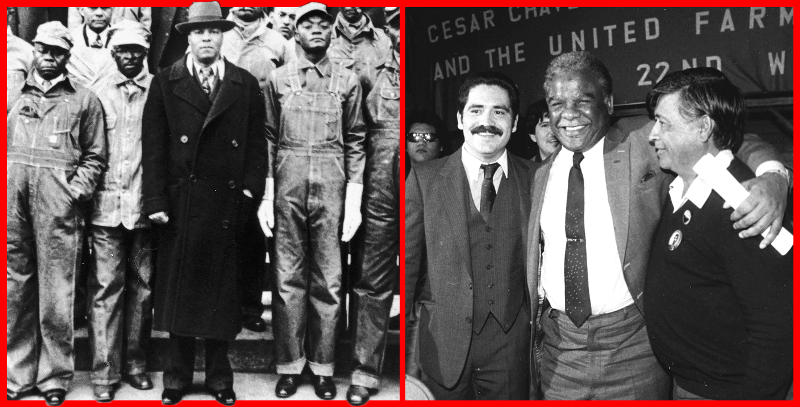
Katie Rader (Penn Political Science)
"Reframing the Ideology of Civil Rights: Early Twentieth Century Debates over Employment Policy"
Jaime Sanchez (Princeton University Department of History)
"'What are We?': Latino Politics, Identity, and Memory in the 1983 Chicago Mayoral Election"
ACHIEVEMENTS LIKE THE BROWN V. BOARD DECISION and the passage of the Civil Rights Act of 1964 are frequently celebrated as both the pinnacle of the Civil Rights Movement and as the result of a linear strategy and a coherent ideology. Yet the question of what would become the dominant ideology for racial equality politics in the U.S. was not a foregone conclusion in the first half of the twentieth century. Ideas worked their way into policy and politics through debates among advocates whose visions for racial egalitarian politics ranged from notions of a social democracy, focused on a broader economic egalitarian agenda, and advocates of more narrowly focused agenda for eliminating racial discrimination and disparity. In other words, the path was neither linear nor pre-determined, but the result of the conflicting ideas, decisions, actions, and resources of the organizations and individuals promoting various strategies and ideologies. Katie Rader seeks to complicate standard narratives of civil rights activism by exploring the ideological positions and tactics of the organizations involved in debates over employment law and policy in the U.S. at two critical moments: the defeated anti-discrimination clause to the 1935 Wagner Act and the workplace seniority debates in 1944. By examining the legislative and organizational debates within Congress, congressional committees, trade unions, the NAACP, the Urban League, A. Philip Randolph’s Brotherhood of Sleeping Car Porters, and others, Rader demonstrates the ideological diversity and early tensions over race and class in the first half of the twentieth century. The result of the ideological conflict extended beyond these organizations and radically shaped the racial equality projects of what we have come to know as the Civil Rights Movement, not to mention the strategies and tactics, that groups pursued in an effort to shape and reform governing institutions.
THE CAMPAIGN PERIOD LEADING UP TO THE 1983 Chicago mayoral election stands as the historically significant period of development for panethnic Latino identity and engagement in electoral politics. Historians of this election, along with popular memory, have come to perpetuate an idealized narrative of the Black-Latino coalition that was forged, with Latinos from all backgrounds coalescing with one another to help elect Chicago’s first black mayor, Harold Washington. However, Latino voters’ support of Washington varied greatly depending on racial identity, differing levels of anti-black racism, generation in the United States, and national heritage; all complicating the efforts of Latino political elites and the Washington campaign to create a cohesive Latino electorate. Through this historical case study, Jaime Sanchez argues that a panethnic Latino identity did not yet exist in the realm of formal electoral politics and that Latinos were still very much politically divided in the 1980s. Instead of assuming a natural and preexistent Latino unity in electoral politics, Sanchez critically examines the strategies used to garner the support of this contested constituency. Functioning simultaneously with the broader project of constructing panethnic Latino unity nationally, the Washington electoral campaign and Latino political elites helped reify the rhetoric of panethnic Latinidad and a “Latino vote.” Via an ambitious dissemination of literature and media, and flying-in of national Latino leaders, Washington’s campaign made a lasting and unique contribution to the rhetoric of national panethnic organizations such as the League of United Latin American Citizens and the Congressional Hispanic Caucus. It is when we understand the actual heterogeneity of Latino voters in this context, that we can qualify the historical construction and imposition of Latino panethnicity in Chicago as well as in the national discourse of Latino politics in the late twentieth century.
GRAD WORKSHOP - Anti-Racist Political Mobilization and the Formation of Collective Identity
Room 350, Ronald O. Perelman Center for Political Science and Economics (133 S. 36th Street)
Food provided / Free and open to the public
Katie Rader (Penn Political Science)
"Reframing the Ideology of Civil Rights: Early Twentieth Century Debates over Employment Policy"
Jaime Sanchez (Princeton University Department of History)
"'What are We?': Latino Politics, Identity, and Memory in the 1983 Chicago Mayoral Election"
ACHIEVEMENTS LIKE THE BROWN V. BOARD DECISION and the passage of the Civil Rights Act of 1964 are frequently celebrated as both the pinnacle of the Civil Rights Movement and as the result of a linear strategy and a coherent ideology. Yet the question of what would become the dominant ideology for racial equality politics in the U.S. was not a foregone conclusion in the first half of the twentieth century. Ideas worked their way into policy and politics through debates among advocates whose visions for racial egalitarian politics ranged from notions of a social democracy, focused on a broader economic egalitarian agenda, and advocates of more narrowly focused agenda for eliminating racial discrimination and disparity. In other words, the path was neither linear nor pre-determined, but the result of the conflicting ideas, decisions, actions, and resources of the organizations and individuals promoting various strategies and ideologies. Katie Rader seeks to complicate standard narratives of civil rights activism by exploring the ideological positions and tactics of the organizations involved in debates over employment law and policy in the U.S. at two critical moments: the defeated anti-discrimination clause to the 1935 Wagner Act and the workplace seniority debates in 1944. By examining the legislative and organizational debates within Congress, congressional committees, trade unions, the NAACP, the Urban League, A. Philip Randolph’s Brotherhood of Sleeping Car Porters, and others, Rader demonstrates the ideological diversity and early tensions over race and class in the first half of the twentieth century. The result of the ideological conflict extended beyond these organizations and radically shaped the racial equality projects of what we have come to know as the Civil Rights Movement, not to mention the strategies and tactics, that groups pursued in an effort to shape and reform governing institutions.
THE CAMPAIGN PERIOD LEADING UP TO THE 1983 Chicago mayoral election stands as the historically significant period of development for panethnic Latino identity and engagement in electoral politics. Historians of this election, along with popular memory, have come to perpetuate an idealized narrative of the Black-Latino coalition that was forged, with Latinos from all backgrounds coalescing with one another to help elect Chicago’s first black mayor, Harold Washington. However, Latino voters’ support of Washington varied greatly depending on racial identity, differing levels of anti-black racism, generation in the United States, and national heritage; all complicating the efforts of Latino political elites and the Washington campaign to create a cohesive Latino electorate. Through this historical case study, Jaime Sanchez argues that a panethnic Latino identity did not yet exist in the realm of formal electoral politics and that Latinos were still very much politically divided in the 1980s. Instead of assuming a natural and preexistent Latino unity in electoral politics, Sanchez critically examines the strategies used to garner the support of this contested constituency. Functioning simultaneously with the broader project of constructing panethnic Latino unity nationally, the Washington electoral campaign and Latino political elites helped reify the rhetoric of panethnic Latinidad and a “Latino vote.” Via an ambitious dissemination of literature and media, and flying-in of national Latino leaders, Washington’s campaign made a lasting and unique contribution to the rhetoric of national panethnic organizations such as the League of United Latin American Citizens and the Congressional Hispanic Caucus. It is when we understand the actual heterogeneity of Latino voters in this context, that we can qualify the historical construction and imposition of Latino panethnicity in Chicago as well as in the national discourse of Latino politics in the late twentieth century.

College Hall, 4th Floor (Philomathean Society)
Free and open to the public / food provided
THE MITCHELL CENTER AND THE PHILOMATHEAN SOCIETY KICK OFF the 2018-19 Politics on the Edge Series with an event that recognizes that all American politics is currently perched on the edge, no more so than in the debate over how the current administration could (and perhaps should) come to an end before the next presidential election. Long before Election Day 2016, in fact, the American public had already begun debating articles of impeachment against the hypothetical presidencies of Donald J. Trump and Hillary Clinton. On Trump's very first day in office, over 30% of the public already supported removing him from office. Since then, Trump's presidency has been shadowed by credible threats of impeachment. What are we to make of this? What does it say about Trump -- and what does it say about the state of our democratic system? In this talk, JOSHUA MATZ will address the origins, history, and theory of the impeachment power. He'll also explain how a focus on preserving democratic institutions in an age of broken politics might drastically alter our outlook on ending presidencies through impeachment.
JOSHUA MATZ is the Publisher of Take Care, an online platform for incisive legal analysis on a wide range of issues that takes its inspiration from Article II, Section 3 of the U.S. Constitution, which commands that the President “shall take Care that the Laws be faithfully executed.” Matz is also of counsel at Gupta Wessler PLLC and Kaplan & Company LLP. His practice specialties include appellate litigation, civil rights, consumer protection, and constitutional law. Matz is the co-author, with Laurence Tribe, of the award-winning Uncertain Justice: The Roberts Court and the Constitution. In May 2018, Matz and Tribe published their second book together, To End a Presidency: The Power of Impeachment. The Economist proclaimed this book "the definitive treatment of a vital subject." In addition, Matz has written about a wide range of legal issues, focusing on LGBT rights, religious freedom, emoluments, military service by transgender individuals, the risks of impeachment talk, and the role of the Supreme Court. His articles have appeared in The Wall Street Journal, The Washington Post, The Guardian, The Atlantic, USA Today, ACS Blog, and Wired.
POLITICS ON THE EDGE - To End a Presidency (Joshua Matz)
College Hall, 4th Floor (Philomathean Society)
Free and open to the public / food provided
THE MITCHELL CENTER AND THE PHILOMATHEAN SOCIETY KICK OFF the 2018-19 Politics on the Edge Series with an event that recognizes that all American politics is currently perched on the edge, no more so than in the debate over how the current administration could (and perhaps should) come to an end before the next presidential election. Long before Election Day 2016, in fact, the American public had already begun debating articles of impeachment against the hypothetical presidencies of Donald J. Trump and Hillary Clinton. On Trump's very first day in office, over 30% of the public already supported removing him from office. Since then, Trump's presidency has been shadowed by credible threats of impeachment. What are we to make of this? What does it say about Trump -- and what does it say about the state of our democratic system? In this talk, JOSHUA MATZ will address the origins, history, and theory of the impeachment power. He'll also explain how a focus on preserving democratic institutions in an age of broken politics might drastically alter our outlook on ending presidencies through impeachment.
JOSHUA MATZ is the Publisher of Take Care, an online platform for incisive legal analysis on a wide range of issues that takes its inspiration from Article II, Section 3 of the U.S. Constitution, which commands that the President “shall take Care that the Laws be faithfully executed.” Matz is also of counsel at Gupta Wessler PLLC and Kaplan & Company LLP. His practice specialties include appellate litigation, civil rights, consumer protection, and constitutional law. Matz is the co-author, with Laurence Tribe, of the award-winning Uncertain Justice: The Roberts Court and the Constitution. In May 2018, Matz and Tribe published their second book together, To End a Presidency: The Power of Impeachment. The Economist proclaimed this book "the definitive treatment of a vital subject." In addition, Matz has written about a wide range of legal issues, focusing on LGBT rights, religious freedom, emoluments, military service by transgender individuals, the risks of impeachment talk, and the role of the Supreme Court. His articles have appeared in The Wall Street Journal, The Washington Post, The Guardian, The Atlantic, USA Today, ACS Blog, and Wired.
