Past Events
College Hall, Room 200
Food Provided / Free and open to the public
Co-sponsored by the Pi Sigma Alpha Political Science Honor Society, The Jack Miller Center, and the Penn Wharton Public Policy Initiative.

Join the five parties of the Penn Political Union for an impassioned debate as they consider the following resolution:
"The federal government should abolish Immigration and Customs Enforcement (ICE)."
PPU Debate - Should We Abolish ICE?
College Hall, Room 200
Food Provided / Free and open to the public
Co-sponsored by the Pi Sigma Alpha Political Science Honor Society, The Jack Miller Center, and the Penn Wharton Public Policy Initiative.
Join the five parties of the Penn Political Union for an impassioned debate as they consider the following resolution:
"The federal government should abolish Immigration and Customs Enforcement (ICE)."

National Constitution Center (525 Arch Street) Map
Presented by The Center for Ethics and the Rule of Law, in partnership with the The Andrea Mitchell Center for the Study of Democracy, Foreign Policy Research Institute (FPRI), Zicklin Center for Business Ethics Research at Wharton, and Penn’s Office of Information Security (OIS).
Listen to audio of the event, broadcaston WHYY, here.

U.S. POLITICAL PHILOSOPHY HAS ALWAYS ENCOMPASSED A DEEP-ROOTED AVERSION to any form of foreign interference against the country’s democratic institutions. But today, the threat is astonishing. Rapid advances in technology, interconnected global communications, flattening of in-person social interactions, creation of social media “bubbles,” and anonymized financial networks have fed and resulted in effective foreign interference efforts on a scale and scope not seen before…and that many believe are outpacing U.S. counter-efforts.
A distinguished panel will examine these crucial issues. Moderated by Trudy Rubin, award-winning foreign affairs columnist for The Philadelphia Inquirer, the panelists include:
- Raymond Baker, President of Global Financial Integrity and internationally renowned authority on dark money
- Mitchell Orenstein, Department Chair of Russian and Eastern European Studies and Professor of Political Science at the University of Pennsylvania
- Shawn Turner, Director of Communication for Center for a New American Security (CNAS), a former senior national security communication executive in the U.S. government, and a regular contributing on-air national security analyst with CNN
- Clint Watts, Distinguished Research Fellow at the Foreign Policy Research Institute (FPRI); author of Messing with the Enemy: Surviving in a Social Media World of Hackers, Terrorists, Russians, and Fake News; and frequent MSNBC commentator
- and other experts to be announced
Free and open to the public: PLEASE REGISTER HERE.
Foreign Interference in Democratic Elections: Countdown to the Midterms
National Constitution Center (525 Arch Street) Map
Presented by The Center for Ethics and the Rule of Law, in partnership with the The Andrea Mitchell Center for the Study of Democracy, Foreign Policy Research Institute (FPRI), Zicklin Center for Business Ethics Research at Wharton, and Penn’s Office of Information Security (OIS).
Listen to audio of the event, broadcaston WHYY, here.
U.S. POLITICAL PHILOSOPHY HAS ALWAYS ENCOMPASSED A DEEP-ROOTED AVERSION to any form of foreign interference against the country’s democratic institutions. But today, the threat is astonishing. Rapid advances in technology, interconnected global communications, flattening of in-person social interactions, creation of social media “bubbles,” and anonymized financial networks have fed and resulted in effective foreign interference efforts on a scale and scope not seen before…and that many believe are outpacing U.S. counter-efforts.
A distinguished panel will examine these crucial issues. Moderated by Trudy Rubin, award-winning foreign affairs columnist for The Philadelphia Inquirer, the panelists include:
- Raymond Baker, President of Global Financial Integrity and internationally renowned authority on dark money
- Mitchell Orenstein, Department Chair of Russian and Eastern European Studies and Professor of Political Science at the University of Pennsylvania
- Shawn Turner, Director of Communication for Center for a New American Security (CNAS), a former senior national security communication executive in the U.S. government, and a regular contributing on-air national security analyst with CNN
- Clint Watts, Distinguished Research Fellow at the Foreign Policy Research Institute (FPRI); author of Messing with the Enemy: Surviving in a Social Media World of Hackers, Terrorists, Russians, and Fake News; and frequent MSNBC commentator
- and other experts to be announced
Free and open to the public: PLEASE REGISTER HERE.

Room 350, Ronald O. Perelman Center for Political Science and Economics (133 S. 36th Street)
Food provided / Free and open to the public
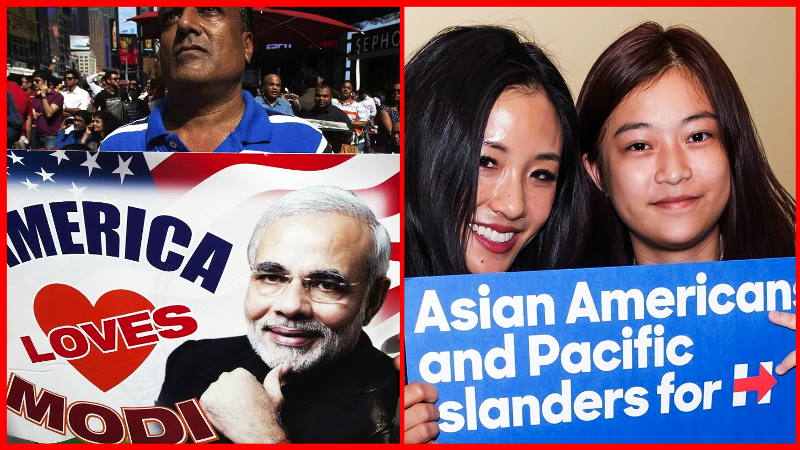
Filip Savatic and Shubha Kamala Prasad (Political Science, Georgetown University)
"To Be or Not to Be: Diasporic Foreign Policy Interest Group Formation in the United States"
Tanika Raychaudhuri (Department of Politics, Princeton University)
"The College Experience and Asian American Political Socialization"
WHY DO SOME IMMIGRANT DIASPORAS IN THE US FORM INTEREST GROUPS that seek to influence US foreign policy while others do not? While scholars have assessed whether diasporic interest groups effectively influence US foreign policy, Filip Savatic and Shuba Kamala Prasad take a step back to ask why only certain diasporas attempt to do so in the first place. Savatic and Prasad argue that two factors increase the likelihood of interest group existence: a diasporic community’s experience with democratic governance and connection to a policy disturbance in its home country. In their paper, the authors investigate whether certain characteristics of foreign-born populations in the US are associated with the existence of a lobbying organization. Savatic and Prasad also conduct the first in-depth case study of the India Lobby, for which they collected original archival and interview data on its historic formation in the 1930s, dissolution in the 1950s, and reemergence in the 2000s.
HOW DO IMMIGRANT CONSTITUENCIES IN THE UNITED STATES, like Asian Americans, develop partisan attitudes and become inclined to participate in politics? In her research, Tanika Raychaudhuri explores why Asian Americans, a racial group with some Republican predispositions—such as high socio-economic status, immigration from communist countries, and identification with conservative Christian denominations—overwhelmingly vote for Democrats in national elections. Her paper (a chapter from her dissertation, “The Social Roots of Asian American Political Attitudes and Action”) examines the influence of college experiences on Asian Americans’ political ideology, partisan preferences, and participation in politics. College is an ideal environment for testing theories grounded in social experience, Raychaudhuri argues, because it is a diverse and immersive setting in which students live, work, and socialize. Using a longitudinal dataset of Asian-American college students (N = 14,539), Raychaudhuri discusses the effects of various types of social experiences, such as friendships with members of different racial groups, membership in ethnic organizations, participation in campus clubs, and campus ideological tilt.
GRAD WORKSHOP - Politics-Making of Diasporas and Immigrants
Room 350, Ronald O. Perelman Center for Political Science and Economics (133 S. 36th Street)
Food provided / Free and open to the public
Filip Savatic and Shubha Kamala Prasad (Political Science, Georgetown University)
"To Be or Not to Be: Diasporic Foreign Policy Interest Group Formation in the United States"
Tanika Raychaudhuri (Department of Politics, Princeton University)
"The College Experience and Asian American Political Socialization"
WHY DO SOME IMMIGRANT DIASPORAS IN THE US FORM INTEREST GROUPS that seek to influence US foreign policy while others do not? While scholars have assessed whether diasporic interest groups effectively influence US foreign policy, Filip Savatic and Shuba Kamala Prasad take a step back to ask why only certain diasporas attempt to do so in the first place. Savatic and Prasad argue that two factors increase the likelihood of interest group existence: a diasporic community’s experience with democratic governance and connection to a policy disturbance in its home country. In their paper, the authors investigate whether certain characteristics of foreign-born populations in the US are associated with the existence of a lobbying organization. Savatic and Prasad also conduct the first in-depth case study of the India Lobby, for which they collected original archival and interview data on its historic formation in the 1930s, dissolution in the 1950s, and reemergence in the 2000s.
HOW DO IMMIGRANT CONSTITUENCIES IN THE UNITED STATES, like Asian Americans, develop partisan attitudes and become inclined to participate in politics? In her research, Tanika Raychaudhuri explores why Asian Americans, a racial group with some Republican predispositions—such as high socio-economic status, immigration from communist countries, and identification with conservative Christian denominations—overwhelmingly vote for Democrats in national elections. Her paper (a chapter from her dissertation, “The Social Roots of Asian American Political Attitudes and Action”) examines the influence of college experiences on Asian Americans’ political ideology, partisan preferences, and participation in politics. College is an ideal environment for testing theories grounded in social experience, Raychaudhuri argues, because it is a diverse and immersive setting in which students live, work, and socialize. Using a longitudinal dataset of Asian-American college students (N = 14,539), Raychaudhuri discusses the effects of various types of social experiences, such as friendships with members of different racial groups, membership in ethnic organizations, participation in campus clubs, and campus ideological tilt.

College Hall, Room 200
WATCH THE FULL VIDEO OF THE EVENT HERE
A REPORT ON THE EVENT IS AVAILABLE HERE
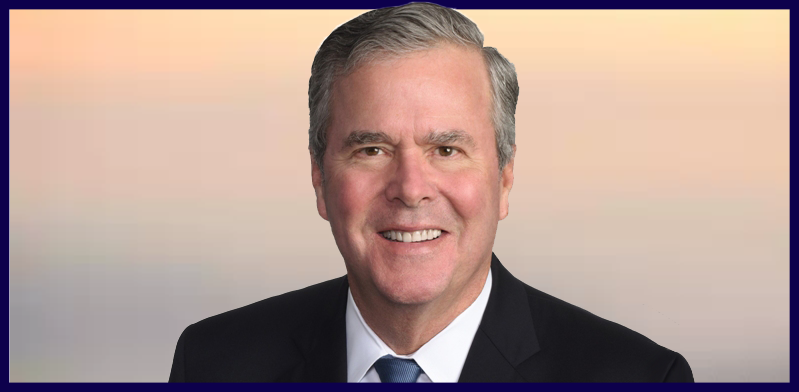
JEB BUSH, THE 43RD GOVERNOR OF FLORIDA, and Penn’s very own Presidential Professor of Practice, joins students for a wide-ranging, candid discussion. Bush will chat first with Professor Jeffrey Green, director of the Mitchell Center, which sponsors the Penn Political Union (PPU), a student organization re-established on campus in 2014. Members of the PPU then asked prepared questions, followed by questions collected from the audience.
PPU TALK - The Health of American Democracy Today (Jeb Bush)
College Hall, Room 200
WATCH THE FULL VIDEO OF THE EVENT HERE
A REPORT ON THE EVENT IS AVAILABLE HERE
JEB BUSH, THE 43RD GOVERNOR OF FLORIDA, and Penn’s very own Presidential Professor of Practice, joins students for a wide-ranging, candid discussion. Bush will chat first with Professor Jeffrey Green, director of the Mitchell Center, which sponsors the Penn Political Union (PPU), a student organization re-established on campus in 2014. Members of the PPU then asked prepared questions, followed by questions collected from the audience.

Forum (Room 250), Ronald O. Perelman Center for Political Science and Economics
Map / Accessibility / Refreshments Provided
Free with registration: PLEASE REGISTER HERE.
ESSAYS BY THE PANELISTS ARE AVAILABLE HERE.
Yascha Mounk, Harvard University
Julia Mead, New York Magazine
Moderator: Nancy Cordes, CBS News.
Globally, are young people democracy's greatest hope, or are they the most willing to embrace authoritarianism?
Free with registration: PLEASE REGISTER HERE.
ESSAYS BY THE PANELISTS ARE AVAILABLE HERE.
Are Youth the Future of Democracy?
Forum (Room 250), Ronald O. Perelman Center for Political Science and Economics
Map / Accessibility / Refreshments Provided
Free with registration: PLEASE REGISTER HERE.
ESSAYS BY THE PANELISTS ARE AVAILABLE HERE.
Yascha Mounk, Harvard University
Julia Mead, New York Magazine
Moderator: Nancy Cordes, CBS News.
Globally, are young people democracy's greatest hope, or are they the most willing to embrace authoritarianism?
Free with registration: PLEASE REGISTER HERE.
ESSAYS BY THE PANELISTS ARE AVAILABLE HERE.
