Past Events
Room 350, Ronald O. Perelman Center for Political Science and Economics (133 S. 36th Street)
Food provided / Free and open to the public
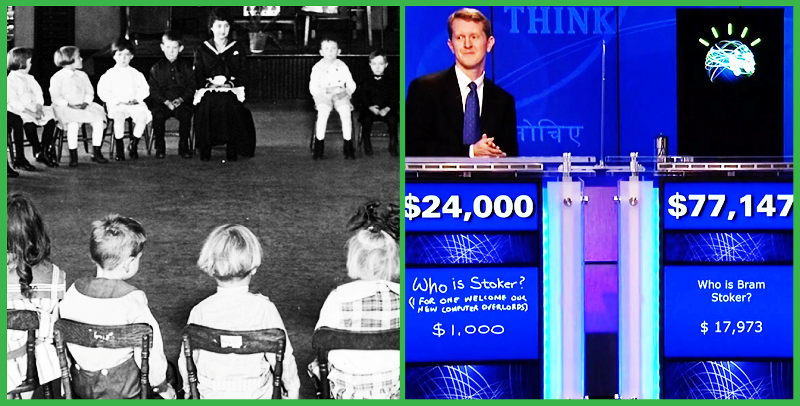
Chelsea Chamberlain (Penn Department of History)
"The Myth of Human Equality: Intelligence Testing and Exceptional Children, 1900-1930"
Ana Klimchynskaya (Penn Comparative Literature)
"Fictions of Equality: Science Fiction and the Technological Challenge to Democracy"
Educational psychologists declared the early twentieth century “the dawn of a new era in education.” Beginning in the 1890s, compulsory education laws had brought increasing numbers of students with wide-ranging mental and physical capacities into schools. Psychologists and educators debated what to do with the “exceptional” children: those who lagged behind, repeating grades without learning anything and the bright children whose potential went unfulfilled. In an era devoted to maximizing efficiency, such waste could not stand. CHELSEA CHAMBERLAIN uses the publications and archival collections of prominent psychologists Leta Hollingworth, J.E. Wallace Wallin, and H.H. Goddard to explore how intelligence testing created and attempted to solve the problem of “exceptional children” in public schools. Their efforts not only reorganized public education but also raised new questions about democracy and citizenship by declaring human equality a myth. Moreover, while historians have argued that compulsory education laws were meant to “safeguard democracy,” Chamberlain argues that connections between public education and eugenic institutionalization demonstrate that, combined with intelligence testing, such laws instead redefined democracy and remade the bounds of citizenship.
Examining several technologies – including machine learning, biotechnological enhancements, and Big Data – ANA KLIMCHYNSKAYA argues that technoscience can bring either increased equality or increases social stratification. With the arguably exponential pace of technological development, however, it has become difficult even for experts to keep up with innovations in their respective fields. Additionally, our legal system is a fundamentally reactive one, with regulation following behind innovation. How, then, do we ensure the proper and informed regulation of new technologies? How might we transform our education system to prepare citizens for the far-reaching transformations such swiftly developing technologies will inevitably bring, and how might we educate them about the dangers and drawbacks of these innovations? And, finally, how might we ensure equal access to these transformative technologies while safeguarding rights, such as those of intellectual property?
GRAD WORKSHOP - Technology and Institutional Access
Room 350, Ronald O. Perelman Center for Political Science and Economics (133 S. 36th Street)
Food provided / Free and open to the public
Chelsea Chamberlain (Penn Department of History)
"The Myth of Human Equality: Intelligence Testing and Exceptional Children, 1900-1930"
Ana Klimchynskaya (Penn Comparative Literature)
"Fictions of Equality: Science Fiction and the Technological Challenge to Democracy"
Educational psychologists declared the early twentieth century “the dawn of a new era in education.” Beginning in the 1890s, compulsory education laws had brought increasing numbers of students with wide-ranging mental and physical capacities into schools. Psychologists and educators debated what to do with the “exceptional” children: those who lagged behind, repeating grades without learning anything and the bright children whose potential went unfulfilled. In an era devoted to maximizing efficiency, such waste could not stand. CHELSEA CHAMBERLAIN uses the publications and archival collections of prominent psychologists Leta Hollingworth, J.E. Wallace Wallin, and H.H. Goddard to explore how intelligence testing created and attempted to solve the problem of “exceptional children” in public schools. Their efforts not only reorganized public education but also raised new questions about democracy and citizenship by declaring human equality a myth. Moreover, while historians have argued that compulsory education laws were meant to “safeguard democracy,” Chamberlain argues that connections between public education and eugenic institutionalization demonstrate that, combined with intelligence testing, such laws instead redefined democracy and remade the bounds of citizenship.
Examining several technologies – including machine learning, biotechnological enhancements, and Big Data – ANA KLIMCHYNSKAYA argues that technoscience can bring either increased equality or increases social stratification. With the arguably exponential pace of technological development, however, it has become difficult even for experts to keep up with innovations in their respective fields. Additionally, our legal system is a fundamentally reactive one, with regulation following behind innovation. How, then, do we ensure the proper and informed regulation of new technologies? How might we transform our education system to prepare citizens for the far-reaching transformations such swiftly developing technologies will inevitably bring, and how might we educate them about the dangers and drawbacks of these innovations? And, finally, how might we ensure equal access to these transformative technologies while safeguarding rights, such as those of intellectual property?

World Forum, Perry World House (3803 Locust Walk) Map / Accessibility
Co-sponsored by The Penn-Temple European Studies Colloquium
WATCH THE FULL VIDEO OF THE EVENT HERE (Begins at 22:30)
ESSAYS BY PANELISTS ARE AVAILABLE HERE

Janine Wedel, George Mason University
Charlie Dent, Former U.S. Representative (R-PA15) and Perry World House Global Order Visiting Fellow
Jeffrey Green, Penn Political Science and Director of the Mitchell Center
Moderator: Mitchell Orenstein, Penn Political Science
IS THE GROWING INEQUALITY IN WEALTH within the world’s developed nations destabilizing their democracies, as it simultaneously erodes accountability for powerful elites and undermines a sense of common purpose among everyday citizens?
WATCH THE FULL VIDEO OF THE EVENT HERE (Begins at 22:30)
ESSAYS BY PANELISTS ARE AVAILABLE HERE
Is Economic Inequality Destroying Democracy? (Janine Wedel, Charlie Dent, Jeffrey Green)
World Forum, Perry World House (3803 Locust Walk) Map / Accessibility
Co-sponsored by The Penn-Temple European Studies Colloquium
WATCH THE FULL VIDEO OF THE EVENT HERE (Begins at 22:30)
ESSAYS BY PANELISTS ARE AVAILABLE HERE
Janine Wedel, George Mason University
Charlie Dent, Former U.S. Representative (R-PA15) and Perry World House Global Order Visiting Fellow
Jeffrey Green, Penn Political Science and Director of the Mitchell Center
Moderator: Mitchell Orenstein, Penn Political Science
IS THE GROWING INEQUALITY IN WEALTH within the world’s developed nations destabilizing their democracies, as it simultaneously erodes accountability for powerful elites and undermines a sense of common purpose among everyday citizens?
WATCH THE FULL VIDEO OF THE EVENT HERE (Begins at 22:30)
ESSAYS BY PANELISTS ARE AVAILABLE HERE

College Hall, Room 200
Free and open to the public
WATCH THE FULL VIDEO OF THE EVENT HERE
Co-sponsored by the Pi Sigma Alpha Political Science Honor Society, The Jack Miller Center, and the Penn Wharton Public Policy Initiative
PLEASE JOIN THE FIVE POLITICAL PARTIES of The Penn Political Union to welcome former supreme allied commander of NATO, General WESLEY CLARK, and former Secretary of Homeland Security and Governor of Pennsylvania TOM RIDGE in a conversation moderated by esteemed journalist JESSICA YELLIN. Drawing on decades of valuable political and national security experience, General Clark and Secretary Ridge will discuss and debate the current trajectory of the United States’ role in the world, followed by questions from the audience. This is a discussion that should not be missed.
WATCH THE FULL VIDEO OF THE EVENT HERE
PPU TALK - America and Its Role in the World (Tom Ridge, Wesley Clark)
College Hall, Room 200
Free and open to the public
WATCH THE FULL VIDEO OF THE EVENT HERE
Co-sponsored by the Pi Sigma Alpha Political Science Honor Society, The Jack Miller Center, and the Penn Wharton Public Policy Initiative
PLEASE JOIN THE FIVE POLITICAL PARTIES of The Penn Political Union to welcome former supreme allied commander of NATO, General WESLEY CLARK, and former Secretary of Homeland Security and Governor of Pennsylvania TOM RIDGE in a conversation moderated by esteemed journalist JESSICA YELLIN. Drawing on decades of valuable political and national security experience, General Clark and Secretary Ridge will discuss and debate the current trajectory of the United States’ role in the world, followed by questions from the audience. This is a discussion that should not be missed.
WATCH THE FULL VIDEO OF THE EVENT HERE

Room 350, Ronald O. Perelman Center for Political Science and Economics (133 S. 36th Street)
Food provided / Free and open to the public
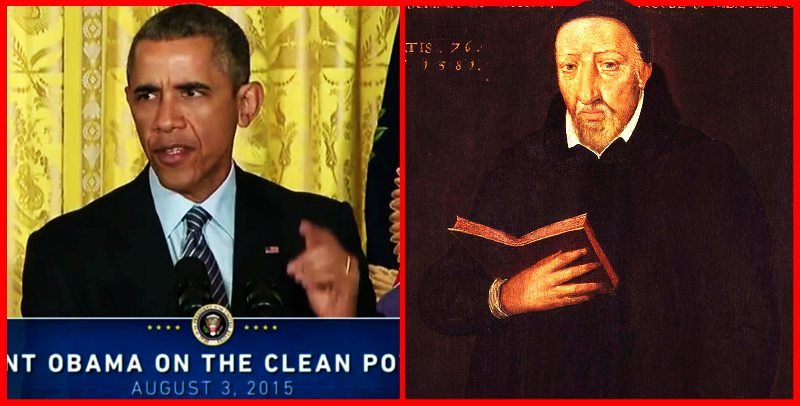
Tim Lundy (Columbia University, English and Comparative Literature)
"Ordinary Subjects of Tyranny: Practical Constitutionalism and Public Judgment in the Political Thought of George Buchanan"
Shany Winder (Fordham University Law School)
“Policymaking Powers of the U.S. Executive Branch”
The emergence of constitutionalism in the political thought of sixteenth and seventeenth century Europe is commonly considered in relationship to history, theology, and law, but less often in relationship to poetic fiction. TIM LUNDY examines the political thought of the Scottish humanist George Buchanan (1506-82) in the context of his two Biblical tragedies, Jephtha and The Baptist. Buchanan’s political thought was recognized as radical in its own day for the strong limits it placed on monarchical power and prerogative and the authority it vested in the people to restrain kings and depose tyrants. Lundy argues, however, that what is most interesting for the history of constitutionalism and democracy is Buchanan’s development of arguments for the perspective of the common people as a privileged site of political insight.
SHANY WINDER explores the analytical question of when it is appropriate, and when it is not, to embrace strong executive exercise of authority, and when is it legitimate for the executive branch to take ambiguous authority and push its boundaries, sometimes acting at the borderlines of the Administrative Procedure Act (APA). Winder pursues these questions vis-à-vis an analysis of two case studies. The first one is the climate change initiatives. Specifically, Environmental Protection Agency's (EPA) implementation of the Clean Air Act (CAA) to address climate change through the Clean Power Plan (CPP) regulation. The second is the Obama administration's immigration initiatives. Winder argues that instead of asserting that “unilateral” executive branch action is either unequivocally good or bad, we need a more nuanced and sophisticated view of this difficult question.
GRAD WORKSHOP - Executive Power and Democracy
Room 350, Ronald O. Perelman Center for Political Science and Economics (133 S. 36th Street)
Food provided / Free and open to the public
Tim Lundy (Columbia University, English and Comparative Literature)
"Ordinary Subjects of Tyranny: Practical Constitutionalism and Public Judgment in the Political Thought of George Buchanan"
Shany Winder (Fordham University Law School)
“Policymaking Powers of the U.S. Executive Branch”
The emergence of constitutionalism in the political thought of sixteenth and seventeenth century Europe is commonly considered in relationship to history, theology, and law, but less often in relationship to poetic fiction. TIM LUNDY examines the political thought of the Scottish humanist George Buchanan (1506-82) in the context of his two Biblical tragedies, Jephtha and The Baptist. Buchanan’s political thought was recognized as radical in its own day for the strong limits it placed on monarchical power and prerogative and the authority it vested in the people to restrain kings and depose tyrants. Lundy argues, however, that what is most interesting for the history of constitutionalism and democracy is Buchanan’s development of arguments for the perspective of the common people as a privileged site of political insight.
SHANY WINDER explores the analytical question of when it is appropriate, and when it is not, to embrace strong executive exercise of authority, and when is it legitimate for the executive branch to take ambiguous authority and push its boundaries, sometimes acting at the borderlines of the Administrative Procedure Act (APA). Winder pursues these questions vis-à-vis an analysis of two case studies. The first one is the climate change initiatives. Specifically, Environmental Protection Agency's (EPA) implementation of the Clean Air Act (CAA) to address climate change through the Clean Power Plan (CPP) regulation. The second is the Obama administration's immigration initiatives. Winder argues that instead of asserting that “unilateral” executive branch action is either unequivocally good or bad, we need a more nuanced and sophisticated view of this difficult question.

Annenberg School for Communication
3620 Walnut Street, Room 109
PLEASE REGISTER HERE
CARTOONS ARE AMONG THE MOST BASIC FORM of political commentary, but their simplicity also renders them vulnerable to attack. Today’s threats range from direct attacks by governments to self-censorship by publishers and the crossfire of the culture wars. This symposium brings together leading artists and experts to discuss the power and precarity of cartoons in America and around the world.
Participants include Barbie Zelizer (Annenberg School), Cherian George (Hong Kong Baptist University), and cartoonists Rob Rogers, Vilma Vargas, Ted Rall, John Lent, Signe Wilkinson, Charles Brownstein, Emad Hajjaj, and Mr. Fish.
PLEASE REGISTER HERE
Co-sponsored Event - Red Lines: Cartooning at Risk (One-Day Symposium)
Annenberg School for Communication
3620 Walnut Street, Room 109
PLEASE REGISTER HERE
CARTOONS ARE AMONG THE MOST BASIC FORM of political commentary, but their simplicity also renders them vulnerable to attack. Today’s threats range from direct attacks by governments to self-censorship by publishers and the crossfire of the culture wars. This symposium brings together leading artists and experts to discuss the power and precarity of cartoons in America and around the world.
Participants include Barbie Zelizer (Annenberg School), Cherian George (Hong Kong Baptist University), and cartoonists Rob Rogers, Vilma Vargas, Ted Rall, John Lent, Signe Wilkinson, Charles Brownstein, Emad Hajjaj, and Mr. Fish.
PLEASE REGISTER HERE
