Past Events
Room 350, Ronald O. Perelman Center for Political Science and Economics (133 S. 36th Street)
Food provided / Free and open to the public
Camille Saurez (Penn History)
"Contesting California: Race, Law, and Resistance in California, 1850 - 1860"
Ximena Benavides (Yale Law)
"The Painful Rationing: Austerity, Inequality, and Health in Puerto Rico"
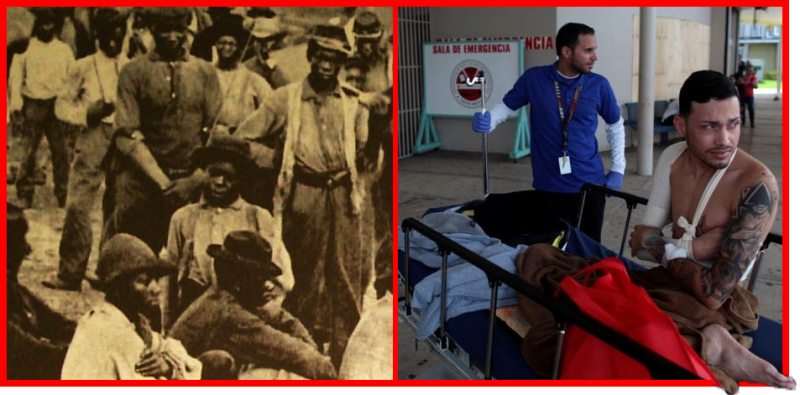
CAMILLE's paper examines the varied ways African Americans, Native Americans, Californios, and Chinese immigrants advocated for rights in California from 1850 to 1860. At the core of this paper is the question: how did African American migrants negotiate the realities of “unfreedom” in a free state with laws that criminalized free African Americans? Alongside the African American experience, Camille interrogates how California Indians resisted exterminatory settler colonialism, how Californios sought to maintain the rights guaranteed by the Treaty of Guadalupe Hidalgo, and how Chinese immigrants challenged political exclusion. She argues that the colonial system that made California an American place depended on the separate, but intertwined racialized exclusions of these groups.
XIMENA’s paper focuses on austerity and inequality on the right to health in Puerto Rico as a result of rationing policies. Beginning with the story of a continuously reformed Puerto Rican healthcare system--shaped by the colonial relationship of the island and the United States—the paper analyzes the financing and delivery of healthcare, as well as the micro-allocation policies used to ration it. Ximena determines when rationing policies can be painful and end up harming the system and elaborates on the differences between the continental U.S. and Puerto Rican healthcare markets, concluding that following the policies of the former represents poor rationing and inequality in the access of healthcare. The paper is drawn from arguments in her doctoral (J.S.D.) dissertation, Where are Health Care Losses Coming From and How Can They Be Controlled? A Legal and Political Analysis of the U.S. Health Care System, which includes studies of wasteful care and the rationing of health care costs.
GRAD WORKSHOP - Rights and Citizenship at America's Edge
Room 350, Ronald O. Perelman Center for Political Science and Economics (133 S. 36th Street)
Food provided / Free and open to the public
Camille Saurez (Penn History)
"Contesting California: Race, Law, and Resistance in California, 1850 - 1860"
Ximena Benavides (Yale Law)
"The Painful Rationing: Austerity, Inequality, and Health in Puerto Rico"
CAMILLE's paper examines the varied ways African Americans, Native Americans, Californios, and Chinese immigrants advocated for rights in California from 1850 to 1860. At the core of this paper is the question: how did African American migrants negotiate the realities of “unfreedom” in a free state with laws that criminalized free African Americans? Alongside the African American experience, Camille interrogates how California Indians resisted exterminatory settler colonialism, how Californios sought to maintain the rights guaranteed by the Treaty of Guadalupe Hidalgo, and how Chinese immigrants challenged political exclusion. She argues that the colonial system that made California an American place depended on the separate, but intertwined racialized exclusions of these groups.
XIMENA’s paper focuses on austerity and inequality on the right to health in Puerto Rico as a result of rationing policies. Beginning with the story of a continuously reformed Puerto Rican healthcare system--shaped by the colonial relationship of the island and the United States—the paper analyzes the financing and delivery of healthcare, as well as the micro-allocation policies used to ration it. Ximena determines when rationing policies can be painful and end up harming the system and elaborates on the differences between the continental U.S. and Puerto Rican healthcare markets, concluding that following the policies of the former represents poor rationing and inequality in the access of healthcare. The paper is drawn from arguments in her doctoral (J.S.D.) dissertation, Where are Health Care Losses Coming From and How Can They Be Controlled? A Legal and Political Analysis of the U.S. Health Care System, which includes studies of wasteful care and the rationing of health care costs.

Houston Hall, Room 218 (Ben Franklin Room)
Free and open to the public / Food provided
Co-sponsored by the University of Pennsylvania Department of Religious Studies
Discussant: Joseph Lowry (Penn Religious Studies)

IN A WIDE-RANGING ATTEMPT TO BETTER UNDERSTAND the predicament of Muslims living in Euro-America today, Hussein Ali Agrama explores the historical relations between authority and suspicion in modern liberal states. He first uses Hannah Arendt as a guide to understand the conceptual loss of authority in modern times, as manifested in Egypt during the aftermath of the 2011 uprisings and the short term of Muhammed Morsi’s aborted presidency. He then highlights a central feature of the modern state that liberal democracies share: the constant need to generate and manage secret knowledge in order to sustain sovereignty. He considers how this process has produced a distinctive economy of secrecy and suspicion and has given rise to particular understandings of truth, citizenship, and blasphemy that shape how Islam is understood and practiced within liberal democracies today.
HUSSEIN ALI AGRAMA is Associate Professor of Anthropology and of the Social Sciences at the University of Chicago. His ongoing research interests are in the anthropology of law, religion, Islam, and the Middle East; in secularism, law and colonial power, and in the genealogies of sovereignty and emergency states. His work has been published in the journals Political Theory, Comparative Studies in Society and History, and American Ethnologist, and in several edited volumes. He is the author of Questioning Secularism: Islam, Sovereignty and the Rule of Law in Egypt (2012).
LUNCHTIME WORKSHOP - After Muslims: Authority, Secrecy and Blasphemy in the Modern Liberal State (Hussein Ali Agrama)
Houston Hall, Room 218 (Ben Franklin Room)
Free and open to the public / Food provided
Co-sponsored by the University of Pennsylvania Department of Religious Studies
Discussant: Joseph Lowry (Penn Religious Studies)
IN A WIDE-RANGING ATTEMPT TO BETTER UNDERSTAND the predicament of Muslims living in Euro-America today, Hussein Ali Agrama explores the historical relations between authority and suspicion in modern liberal states. He first uses Hannah Arendt as a guide to understand the conceptual loss of authority in modern times, as manifested in Egypt during the aftermath of the 2011 uprisings and the short term of Muhammed Morsi’s aborted presidency. He then highlights a central feature of the modern state that liberal democracies share: the constant need to generate and manage secret knowledge in order to sustain sovereignty. He considers how this process has produced a distinctive economy of secrecy and suspicion and has given rise to particular understandings of truth, citizenship, and blasphemy that shape how Islam is understood and practiced within liberal democracies today.
HUSSEIN ALI AGRAMA is Associate Professor of Anthropology and of the Social Sciences at the University of Chicago. His ongoing research interests are in the anthropology of law, religion, Islam, and the Middle East; in secularism, law and colonial power, and in the genealogies of sovereignty and emergency states. His work has been published in the journals Political Theory, Comparative Studies in Society and History, and American Ethnologist, and in several edited volumes. He is the author of Questioning Secularism: Islam, Sovereignty and the Rule of Law in Egypt (2012).

WATCH VIDEOS OF THE FULL CONFERENCE
World Forum, Perry World House (3803 Locust Walk) Map / Accessibility
Co-sponsored by Perry World House, Fels Policy Research Initiative, Foreign Policy Research Institute, and Penn-Temple European Studies Colloquium
PAPERS BY CONFERENCE PANELISTS ARE AVAILABLE HERE.
Opening Conference - Democracy in Trouble?
WATCH VIDEOS OF THE FULL CONFERENCE
World Forum, Perry World House (3803 Locust Walk) Map / Accessibility
Co-sponsored by Perry World House, Fels Policy Research Initiative, Foreign Policy Research Institute, and Penn-Temple European Studies Colloquium
PAPERS BY CONFERENCE PANELISTS ARE AVAILABLE HERE.

College Hall, Room 200
Food Provided
Co-sponsored by the Pi Sigma Alpha Political Science Honor Society, The Jack Miller Center, and the Penn Wharton Public Policy Initiative.
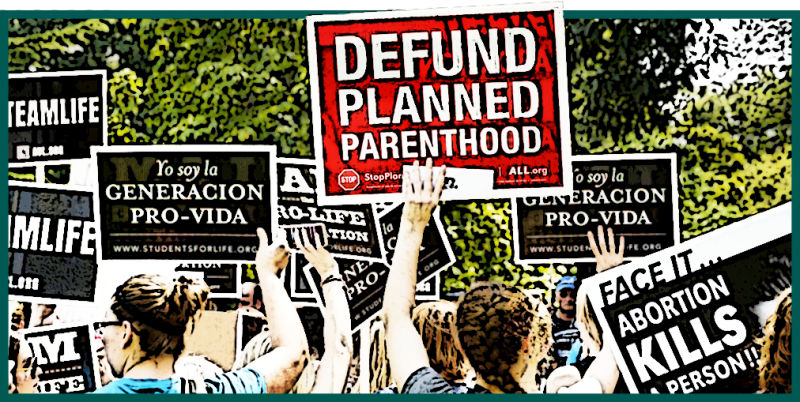
Join the five parties of the Penn Political Union for an impassioned debate as they consider the following resolution:
"The federal government should cease all funding to healthcare clinics that provide abortions."
PPU Debate: Federal Funding for Abortion Providers
College Hall, Room 200
Food Provided
Co-sponsored by the Pi Sigma Alpha Political Science Honor Society, The Jack Miller Center, and the Penn Wharton Public Policy Initiative.
Join the five parties of the Penn Political Union for an impassioned debate as they consider the following resolution:
"The federal government should cease all funding to healthcare clinics that provide abortions."

Silverstein Forum, Stiteler Hall First Floor (Accessibility)
Free and Open to the Public / Refreshments Served
Discussants: MATTHEW LASSITER (University of Michigan),
LEO RIBUFFO (George Washington University), and
JONATHAN ZIMMERMAN (Penn GSE)
All attendess are encouraged to read a sample chapter of
Dr. Schultz's book manuscript, available here.
Garden of the Gods: Colorado Springs and American Evangelicalism explains how Colorado Springs, Colorado became the capital city of evangelical Christianity in the United States. Evangelicals sought to transform the city into a Christian utopia; their efforts had national repercussions, as Colorado Springs became a model for the “culture wars” of the 1980s and ‘90s. Garden of the Gods shows how evangelical Christianity converged with free-market capitalism and the warfare state to transform a once-sleepy resort town into “Jesus Springs.”
WILLIAM SCHULTZ is an historian of the modern United States, with a focus on the relationship between religion and politics. Schultz earned his Ph.D. at Princeton University and his B.A. in History and Political Science from the University of North Carolina at Chapel Hill.
MATTHEW D. LASSITER is an associate professor of history and of urban and regional planning at the University of Michigan, where he teaches courses about modern U.S. history, urban/suburban history, political history, and the wars on crime and drugs. He is the author of The Silent Majority: Suburban Politics in the Sunbelt South (2006), winner of the Southern Regional Council’s Lillian Smith Book Award. His Journal of Urban History article, “The Suburban Origins of ‘Color-Blind’ Conservatism: Middle-Class Consciousness in the Charlotte Busing Crisis,” was republished in The Best American History Essays 2006 (2006). He is also a coeditor of The Myth of Southern Exceptionalism (2010) and The Moderates’ Dilemma: Massive Resistance to School Desegregation in Virginia (1998). His current book project is “The Suburban Crisis: The Pursuit and Defense of the American Dream.”
LEO P. RIBUFFO specializes in 20th century US history and American intellectual history. He is currently writing The Limits of Moderation: Jimmy Carter and the Ironies of American Liberalism, which interprets Jimmy Carter's presidency in broad social and cultural context. based on extensive use of archival material at his presidential library, including recently declassified documents relating to foreign policy and defense. He has taught in China and lectured in Japan, Mexico, Germany, India, Nigeria, and the Republic of Korea.
A former Peace Corps volunteer and public school social studies teacher, JONATHAN ZIMMERMAN holds a Ph.D. in history from the Johns Hopkins University. His scholarship has focused broadly on the ways that different peoples have imagined and debated education across time and space. He has authored books about sex and alcohol education, history and religion in the curriculum, Americans who taught overseas, and historical memory in public schooling. His most recent work examines campus politics in the United States, including controversies over diversity, sexual assault, and “political correctness.”
POSTDOC MANUSCRIPT WORKSHOP - Garden of the Gods (William Schultz)
Silverstein Forum, Stiteler Hall First Floor (Accessibility)
Free and Open to the Public / Refreshments Served
Discussants: MATTHEW LASSITER (University of Michigan),
LEO RIBUFFO (George Washington University), and
JONATHAN ZIMMERMAN (Penn GSE)
All attendess are encouraged to read a sample chapter of
Dr. Schultz's book manuscript, available here.
Garden of the Gods: Colorado Springs and American Evangelicalism explains how Colorado Springs, Colorado became the capital city of evangelical Christianity in the United States. Evangelicals sought to transform the city into a Christian utopia; their efforts had national repercussions, as Colorado Springs became a model for the “culture wars” of the 1980s and ‘90s. Garden of the Gods shows how evangelical Christianity converged with free-market capitalism and the warfare state to transform a once-sleepy resort town into “Jesus Springs.”
WILLIAM SCHULTZ is an historian of the modern United States, with a focus on the relationship between religion and politics. Schultz earned his Ph.D. at Princeton University and his B.A. in History and Political Science from the University of North Carolina at Chapel Hill.
MATTHEW D. LASSITER is an associate professor of history and of urban and regional planning at the University of Michigan, where he teaches courses about modern U.S. history, urban/suburban history, political history, and the wars on crime and drugs. He is the author of The Silent Majority: Suburban Politics in the Sunbelt South (2006), winner of the Southern Regional Council’s Lillian Smith Book Award. His Journal of Urban History article, “The Suburban Origins of ‘Color-Blind’ Conservatism: Middle-Class Consciousness in the Charlotte Busing Crisis,” was republished in The Best American History Essays 2006 (2006). He is also a coeditor of The Myth of Southern Exceptionalism (2010) and The Moderates’ Dilemma: Massive Resistance to School Desegregation in Virginia (1998). His current book project is “The Suburban Crisis: The Pursuit and Defense of the American Dream.”
LEO P. RIBUFFO specializes in 20th century US history and American intellectual history. He is currently writing The Limits of Moderation: Jimmy Carter and the Ironies of American Liberalism, which interprets Jimmy Carter's presidency in broad social and cultural context. based on extensive use of archival material at his presidential library, including recently declassified documents relating to foreign policy and defense. He has taught in China and lectured in Japan, Mexico, Germany, India, Nigeria, and the Republic of Korea.
A former Peace Corps volunteer and public school social studies teacher, JONATHAN ZIMMERMAN holds a Ph.D. in history from the Johns Hopkins University. His scholarship has focused broadly on the ways that different peoples have imagined and debated education across time and space. He has authored books about sex and alcohol education, history and religion in the curriculum, Americans who taught overseas, and historical memory in public schooling. His most recent work examines campus politics in the United States, including controversies over diversity, sexual assault, and “political correctness.”
