Past Events
College Hall, Room 200
Free and open to the public / Food will be served.
Co-sponsored by the Pi Sigma Alpha Political Science Honor Society and the Penn Wharton Public Policy Initiative.
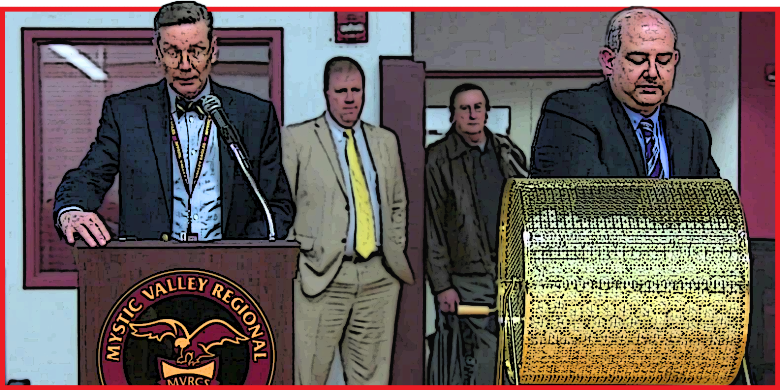
JOIN THE PENN POLITICAL UNION and guest debater DAVID BOAZ (Cato Institute) as its five political parties debate the resolution, “U.S. states should enact education reform centered around school choice.”
MITCHELL CENTER / PPU DEBATE - Is School Choice the Best Path for Education Reform?
College Hall, Room 200
Free and open to the public / Food will be served.
Co-sponsored by the Pi Sigma Alpha Political Science Honor Society and the Penn Wharton Public Policy Initiative.
JOIN THE PENN POLITICAL UNION and guest debater DAVID BOAZ (Cato Institute) as its five political parties debate the resolution, “U.S. states should enact education reform centered around school choice.”

Fisher-Bennett Hall, Room 112 (Accessibility)
Free and open to the public / Lunch provided
Rajgopal Saikumar (New York University, English)
"Jurisdictional Crisis in the Kashmir Novel"
Zachary Smith (Penn Political Science)
"Electoral Reform in the Middle East: Rising Parties and Elite Action in Israel and Jordan"
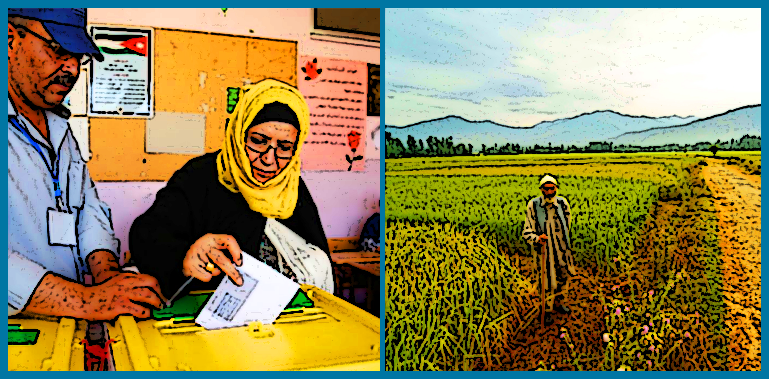
In his paper, RAJGOPAL SAIKUMAR makes the following arguments: First, these material conditions (objects like the barriers, checkposts, wires,walls, fences etc.) form the background of every contemporary Kashmir novel. Let us call these background material conditions the ‘jurisdictional conditions’ of the contemporary Kashmir literature. Second, these jurisdictional conditions need to be read as signs, codes, and ques, charged with a certain politico-juridical history going back to Indian constitutionalism as it evolved during the partition and decolonisation of India and Pakistan. Third, in literary narratives, these jurisdictional conditions produce a jurisdictional crisis, as sites of stuckness, and the novels are a performance of stuckness. Literature encrypts jurisdictions spatiotemporally, as what Bakhtin calls a chronotope. It is via these jurisdictional conditions that I explore the three thematics of my problem-space enumerated above. In trying to explicate the literary representations of jurisdictional crises, for heuristic purposes, Saikumar suggests provisional typologies of representation that emerge from the texts, such as: the typology of prohibition; of displacement and condensation; of speech and aphasia; of heroism, love and family romance; and of global literary friendships
In his paper revolving around the cases of Israel and Jordan, ZACHARY SMITH broadens the scope of electoral systems engineering and generalizes the concept of threat. Under this model, incumbent parties engage in electoral engineering when they feel threatened by other parties on the political scene. First, he examines multiple changes to the electoral system, from shifts in the method of translation of votes into seats, such as single-member plurality districts or proportional representation, to smaller shifts in the legal implementation of the electoral system. Second, he develops two types of threat: ideological, whereby incumbent parties are so revolted by the ideas fronted by parties that they seek to exclude them from the political system entirely, and instrumental, whereby incumbents fear that threatening parties could supplant them for representation of incumbent party voters. Third, he takes into account elites’ perception of the past and expectations of the future, in which categorized as rising, stable, or falling. Finally, he addresses the potential that changes to the electoral system or its legal implementation can backfire.
GRAD WORKSHOP - The Politics of Jurisprudence
Fisher-Bennett Hall, Room 112 (Accessibility)
Free and open to the public / Lunch provided
Rajgopal Saikumar (New York University, English)
"Jurisdictional Crisis in the Kashmir Novel"
Zachary Smith (Penn Political Science)
"Electoral Reform in the Middle East: Rising Parties and Elite Action in Israel and Jordan"
In his paper, RAJGOPAL SAIKUMAR makes the following arguments: First, these material conditions (objects like the barriers, checkposts, wires,walls, fences etc.) form the background of every contemporary Kashmir novel. Let us call these background material conditions the ‘jurisdictional conditions’ of the contemporary Kashmir literature. Second, these jurisdictional conditions need to be read as signs, codes, and ques, charged with a certain politico-juridical history going back to Indian constitutionalism as it evolved during the partition and decolonisation of India and Pakistan. Third, in literary narratives, these jurisdictional conditions produce a jurisdictional crisis, as sites of stuckness, and the novels are a performance of stuckness. Literature encrypts jurisdictions spatiotemporally, as what Bakhtin calls a chronotope. It is via these jurisdictional conditions that I explore the three thematics of my problem-space enumerated above. In trying to explicate the literary representations of jurisdictional crises, for heuristic purposes, Saikumar suggests provisional typologies of representation that emerge from the texts, such as: the typology of prohibition; of displacement and condensation; of speech and aphasia; of heroism, love and family romance; and of global literary friendships
In his paper revolving around the cases of Israel and Jordan, ZACHARY SMITH broadens the scope of electoral systems engineering and generalizes the concept of threat. Under this model, incumbent parties engage in electoral engineering when they feel threatened by other parties on the political scene. First, he examines multiple changes to the electoral system, from shifts in the method of translation of votes into seats, such as single-member plurality districts or proportional representation, to smaller shifts in the legal implementation of the electoral system. Second, he develops two types of threat: ideological, whereby incumbent parties are so revolted by the ideas fronted by parties that they seek to exclude them from the political system entirely, and instrumental, whereby incumbents fear that threatening parties could supplant them for representation of incumbent party voters. Third, he takes into account elites’ perception of the past and expectations of the future, in which categorized as rising, stable, or falling. Finally, he addresses the potential that changes to the electoral system or its legal implementation can backfire.

Fifty Years After MLK (Dinner and Dialogue)
Houston Hall, Hall of Flags
Please register for this event on Eventbrite

College Hall, Room 200
Free and open to the public / Food will be served
Co-sponsored by the Pi Sigma Alpha Political Science Honor Society, The Jack Miller Center, and the Penn Wharton Public Policy Initiative.
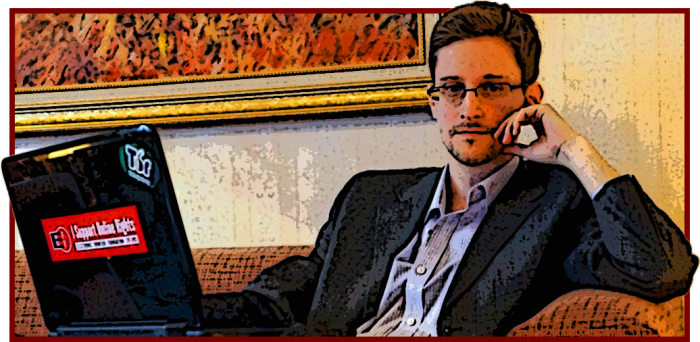
JOIN THE PENN POLITICAL UNION as we debate the following resolution: "The benefits of leaking classified information to the media outweigh the costs."
PPU DEBATE - Whistleblowers and State Secrets
College Hall, Room 200
Free and open to the public / Food will be served
Co-sponsored by the Pi Sigma Alpha Political Science Honor Society, The Jack Miller Center, and the Penn Wharton Public Policy Initiative.
JOIN THE PENN POLITICAL UNION as we debate the following resolution: "The benefits of leaking classified information to the media outweigh the costs."

The Politics of Hue (Ufuoma Abiola)
Irvine Auditorium, Green Room (Ground Floor, G01) (Accessibility)
Free and open to the public / Refreshments
