Past Events
Room 350, Ronald O. Perelman Center for Political Science and Economics (133 S. 36th Street)
Food provided / Free and open to the public
Arturo Castellanos (Cornell Law School)
"Shosics: Their Right to Vote and to Hold Office in the United States"
Alexander Kustov (Princeton University, Department of Politics)
"The Borders of Compassion: Immigration and the Politics of Parochial Altruism"
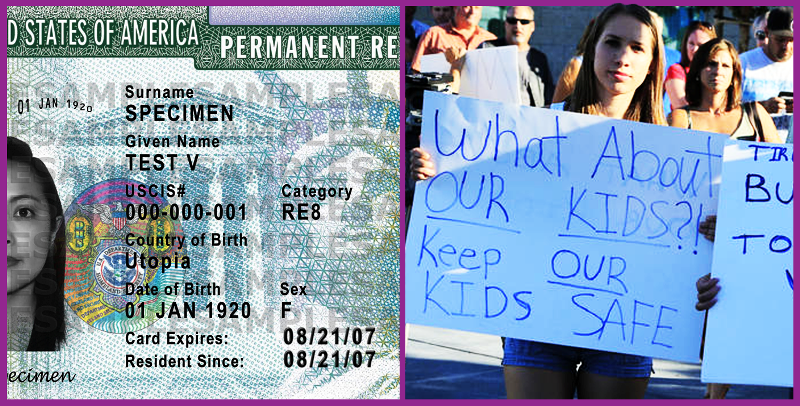
In the vast majority of countries, citizenship remains a virtually unchallenged condition for the right to vote. Today, millions of people are denied the right to vote by democratic governments all over the world because they are not citizens of the country where they reside. This makes Resident Non-Citizens (RNCs) one of the largest groups of adults excluded from participation in democratic processes. ARTURO CASTELLANOS argues that the fundamental reason for worrying about democratic exclusion of RNCs is that public authorities often neglect people without a political voice. People who are denied political avenues for voicing their concerns are not as successful in attracting the attention of mayors, governors, presidents, legislators, and judges. This situation―which leads to exclusion and discrimination―is particularly worrying in countries like the United States, which is home to 43.3 million immigrants out of which 22.6 million are RNCs (MPI, 2017). In other words, 7% of the population of the United States does not have the right to vote in their country of residence, because the American legal framework has made a distinction between Citizens and RNCs. Eventually, this concern will have to be addressed by courts and it will become a hard case to solve for the judges. In his research, Castellanos intends to provide answers to the future hard questions that they will address.
Widespread opposition to immigration among educated and racially egalitarian voters is hard to explain using existing frameworks that attribute these sentiments to self-interest or prejudice. ALEXANDER KUSTOV address this puzzle by developing a theory of parochial altruism, which argues that many voters are willing to help others at even a personal cost, but they want to help their fellow citizens first. Voters thus tend to favor harsh restrictions on immigration--when they perceive them as necessary to secure the well-being of compatriots. Using a novel measure of elicited preferences, Kustov ran a population-based UK study to find that, compared to altruistic voters who donate to global charities, altruists who chose to donate to domestic charities were as anti-immigration as those who do not donate. All altruists were nevertheless more likely to support immigration when it explicitly benefits their country. Kustov then conducted a pre-registered, population-based conjoint experiment to estimate the effect of policy consequences on immigration policy choice. The results demonstrated that, despite their ethnic biases, most voters can in principle support increasing immigration from non-European countries if they believe it benefits themselves and their compatriots. As indicated by similar results from the US and other countries, Kustov argues that the political dynamic of parochial altruism is a general phenomenon.
GRAD WORKSHOP - Citizens and Non-Citizens in Democratic Regimes
Room 350, Ronald O. Perelman Center for Political Science and Economics (133 S. 36th Street)
Food provided / Free and open to the public
Arturo Castellanos (Cornell Law School)
"Shosics: Their Right to Vote and to Hold Office in the United States"
Alexander Kustov (Princeton University, Department of Politics)
"The Borders of Compassion: Immigration and the Politics of Parochial Altruism"
In the vast majority of countries, citizenship remains a virtually unchallenged condition for the right to vote. Today, millions of people are denied the right to vote by democratic governments all over the world because they are not citizens of the country where they reside. This makes Resident Non-Citizens (RNCs) one of the largest groups of adults excluded from participation in democratic processes. ARTURO CASTELLANOS argues that the fundamental reason for worrying about democratic exclusion of RNCs is that public authorities often neglect people without a political voice. People who are denied political avenues for voicing their concerns are not as successful in attracting the attention of mayors, governors, presidents, legislators, and judges. This situation―which leads to exclusion and discrimination―is particularly worrying in countries like the United States, which is home to 43.3 million immigrants out of which 22.6 million are RNCs (MPI, 2017). In other words, 7% of the population of the United States does not have the right to vote in their country of residence, because the American legal framework has made a distinction between Citizens and RNCs. Eventually, this concern will have to be addressed by courts and it will become a hard case to solve for the judges. In his research, Castellanos intends to provide answers to the future hard questions that they will address.
Widespread opposition to immigration among educated and racially egalitarian voters is hard to explain using existing frameworks that attribute these sentiments to self-interest or prejudice. ALEXANDER KUSTOV address this puzzle by developing a theory of parochial altruism, which argues that many voters are willing to help others at even a personal cost, but they want to help their fellow citizens first. Voters thus tend to favor harsh restrictions on immigration--when they perceive them as necessary to secure the well-being of compatriots. Using a novel measure of elicited preferences, Kustov ran a population-based UK study to find that, compared to altruistic voters who donate to global charities, altruists who chose to donate to domestic charities were as anti-immigration as those who do not donate. All altruists were nevertheless more likely to support immigration when it explicitly benefits their country. Kustov then conducted a pre-registered, population-based conjoint experiment to estimate the effect of policy consequences on immigration policy choice. The results demonstrated that, despite their ethnic biases, most voters can in principle support increasing immigration from non-European countries if they believe it benefits themselves and their compatriots. As indicated by similar results from the US and other countries, Kustov argues that the political dynamic of parochial altruism is a general phenomenon.

Facts, Free Speech, and Empathy: Journalism in the Age of Trump (Amna Nawaz)
College Hall, 4th Floor (Philomathean Society)
Food provided / Free and open to the public

Room 350, Ronald O. Perelman Center for Political Science and Economics (133 S. 36th Street)
Food provided / Free and open to the public
Talia Shalev (CUNY Graduate Center)
"Imagining Equality without Protection in the Era of the ERA"
Dylan Yaeger (Fordham Law School)
"The Difference Dilemma in Masculinity Studies: The Creation of Gender Categories in Antidiscrimination Law"
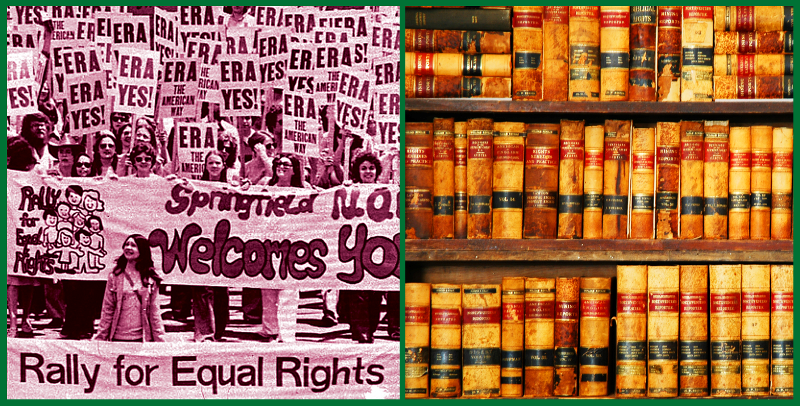
TALIA SHALEV brings together Constitutional and poetic visions of equality in order to explore how the meaning of equality was negotiated during the 1970s, a decade marked by shifting discourse around equal rights. Shalev compares the text of the equal protection clause to that of the 1972 ERA, finding that each invites different metaphors through which to understand the relationship between equality and law, emphasizing protection and sanctuary, respectively. As a means of exploring the implications of these metaphors, she looks to poems by June Jordan and Adrienne Rich, two writers who were deeply engaged in the social movements of their time.
DYLAN YAEGER argues that antidiscrimination law, more than any other area of law, is explicitly defining the parameters of masculinity. He looks at three areas of anti-discrimination law—pregnancy, “lack of interest”, and gender stereotyping cases—to illustrate how this occurs. He argues that looking at these areas of antidiscrimination law through a masculinity studies lens reveals things about them that have been largely under scrutinized. Yaeger shows how the courts, when addressing questions of sex equality and antidiscrimination, are actively engaged not only in addressing issues of sexual equality, but of policing and actually creating masculinity.
GRAD WORKSHOP - Law and Gender
Room 350, Ronald O. Perelman Center for Political Science and Economics (133 S. 36th Street)
Food provided / Free and open to the public
Talia Shalev (CUNY Graduate Center)
"Imagining Equality without Protection in the Era of the ERA"
Dylan Yaeger (Fordham Law School)
"The Difference Dilemma in Masculinity Studies: The Creation of Gender Categories in Antidiscrimination Law"
TALIA SHALEV brings together Constitutional and poetic visions of equality in order to explore how the meaning of equality was negotiated during the 1970s, a decade marked by shifting discourse around equal rights. Shalev compares the text of the equal protection clause to that of the 1972 ERA, finding that each invites different metaphors through which to understand the relationship between equality and law, emphasizing protection and sanctuary, respectively. As a means of exploring the implications of these metaphors, she looks to poems by June Jordan and Adrienne Rich, two writers who were deeply engaged in the social movements of their time.
DYLAN YAEGER argues that antidiscrimination law, more than any other area of law, is explicitly defining the parameters of masculinity. He looks at three areas of anti-discrimination law—pregnancy, “lack of interest”, and gender stereotyping cases—to illustrate how this occurs. He argues that looking at these areas of antidiscrimination law through a masculinity studies lens reveals things about them that have been largely under scrutinized. Yaeger shows how the courts, when addressing questions of sex equality and antidiscrimination, are actively engaged not only in addressing issues of sexual equality, but of policing and actually creating masculinity.

College Hall, 4th Floor (Philomathean Society)
Free and open to the public
See the Facebook page for this event here.

JOIN THE PHILOMATHEAN SOCIETY FOR THE THIRD TALK in its Annual Lecture Series: "Growing Pains: Confronting the Rise of China." Professor AVERY GOLDSTEIN will give a lecture exploring China’s foreign policy under Xi Jinping and its consequences for relations with the US.
Professor Goldstein is the David M. Knott Professor of Global Politics and International Relations in the Political Science Department, Director of the Center for the Study of Contemporary China, and Associate Director of the Christopher H. Browne Center for International Politics at Penn. His research focuses on international relations, security studies, and Chinese politics.
Founded in 1813, Philomathean Society is a student-run literary society that arranges events, lectures, debates, teas, art exhibits, & more. You can join the mailing list for the Society's newsletter here.
Co-sponsored with the Andrea Mitchell Center, Center for the Study of Contemporary China, and the Political Science department.
Co-sponsored Event - Xi Jinping and the New Phase of Chinese Foreign Policy (Avery Goldstein)
College Hall, 4th Floor (Philomathean Society)
Free and open to the public
See the Facebook page for this event here.
JOIN THE PHILOMATHEAN SOCIETY FOR THE THIRD TALK in its Annual Lecture Series: "Growing Pains: Confronting the Rise of China." Professor AVERY GOLDSTEIN will give a lecture exploring China’s foreign policy under Xi Jinping and its consequences for relations with the US.
Professor Goldstein is the David M. Knott Professor of Global Politics and International Relations in the Political Science Department, Director of the Center for the Study of Contemporary China, and Associate Director of the Christopher H. Browne Center for International Politics at Penn. His research focuses on international relations, security studies, and Chinese politics.
Founded in 1813, Philomathean Society is a student-run literary society that arranges events, lectures, debates, teas, art exhibits, & more. You can join the mailing list for the Society's newsletter here.
Co-sponsored with the Andrea Mitchell Center, Center for the Study of Contemporary China, and the Political Science department.

Revolution is the Solution (Boots Riley)
International House, Lightbox Film Center (3701 Chestnut St)
Free Admission (seating on a first-come basis) + Free Reception starting at 5:00pm in the Lobby
PLEASE REGISTER HERE